Securing the Global Fleet: A Greece–Norway Dialogue at Posidonia 2026
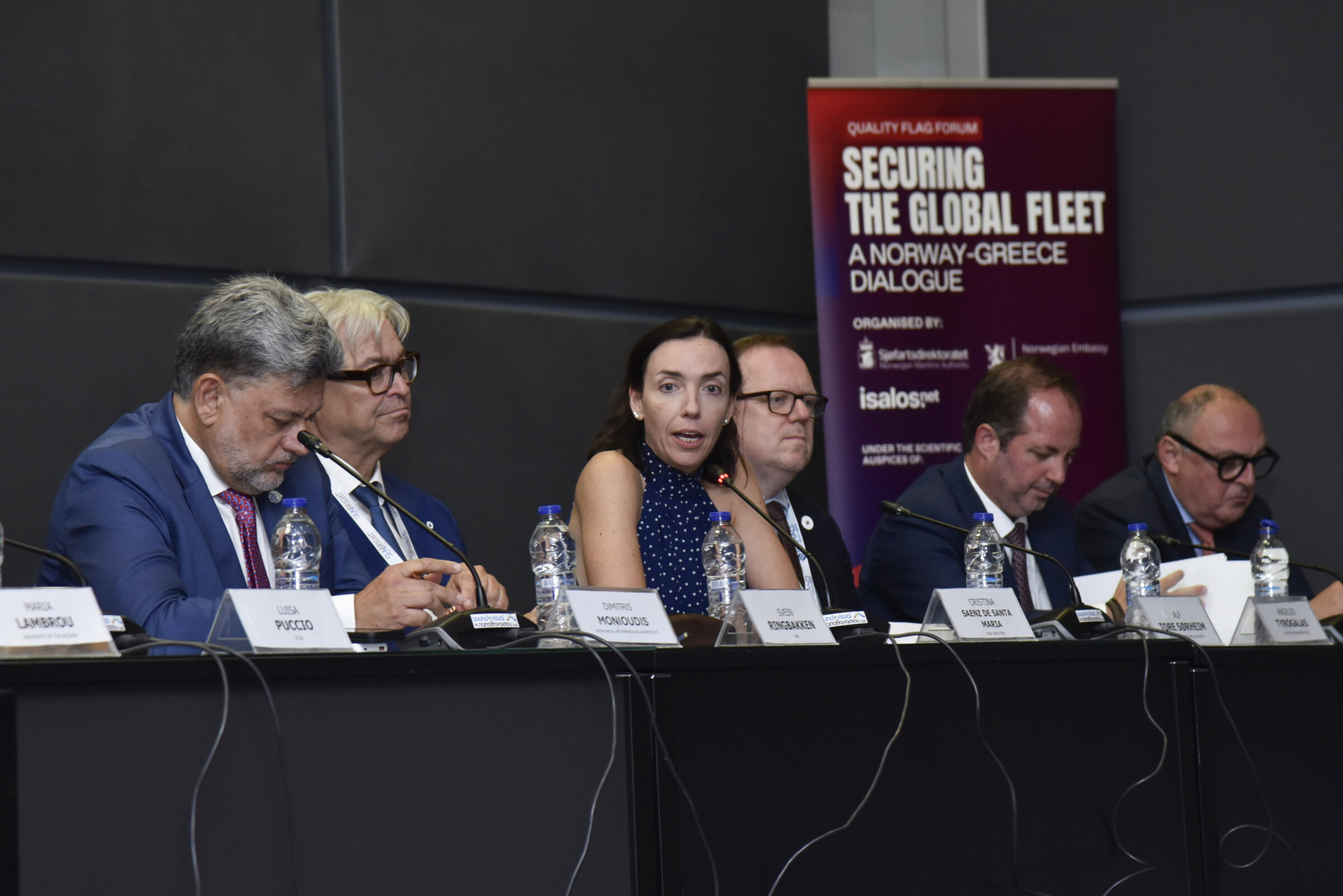
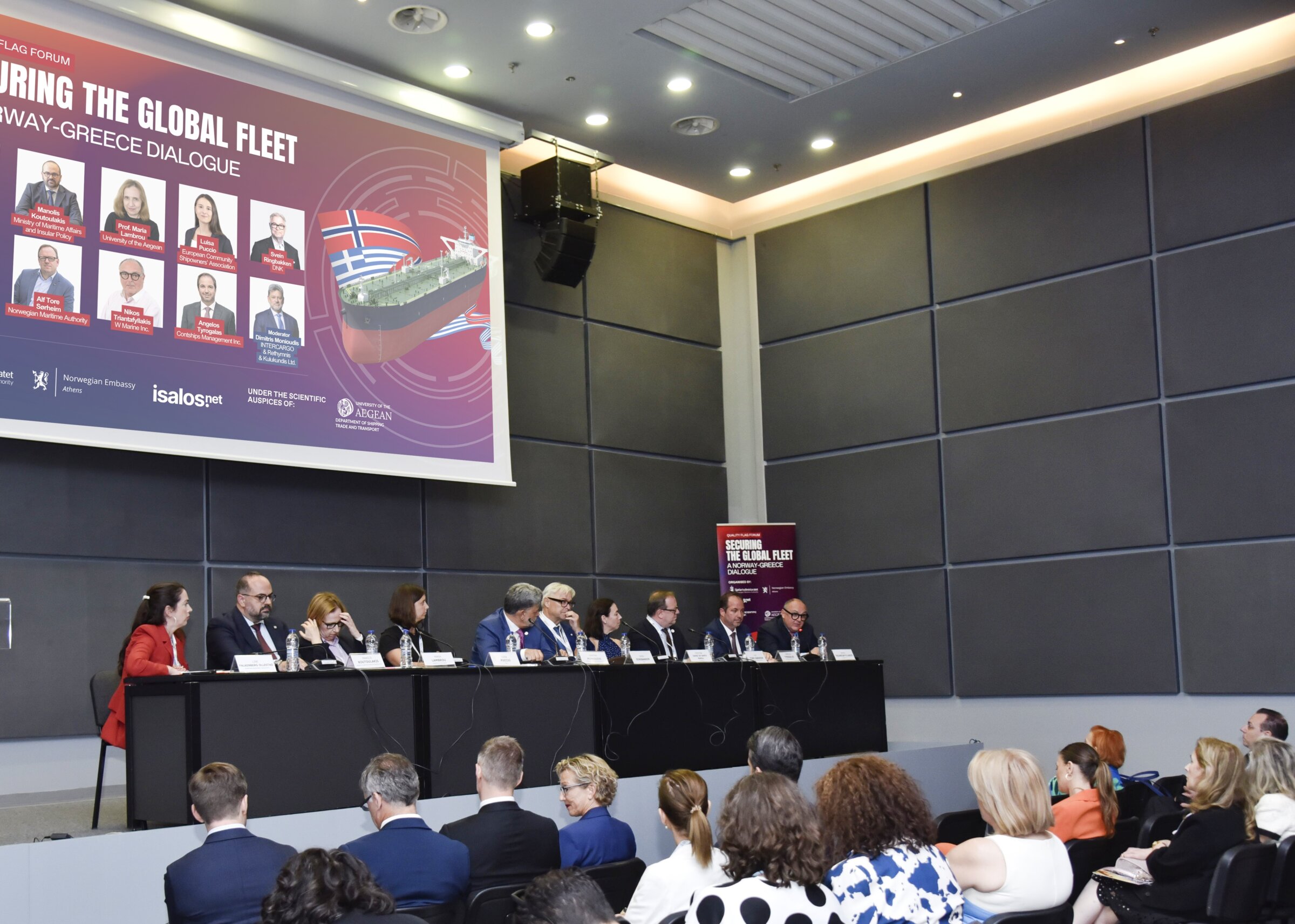
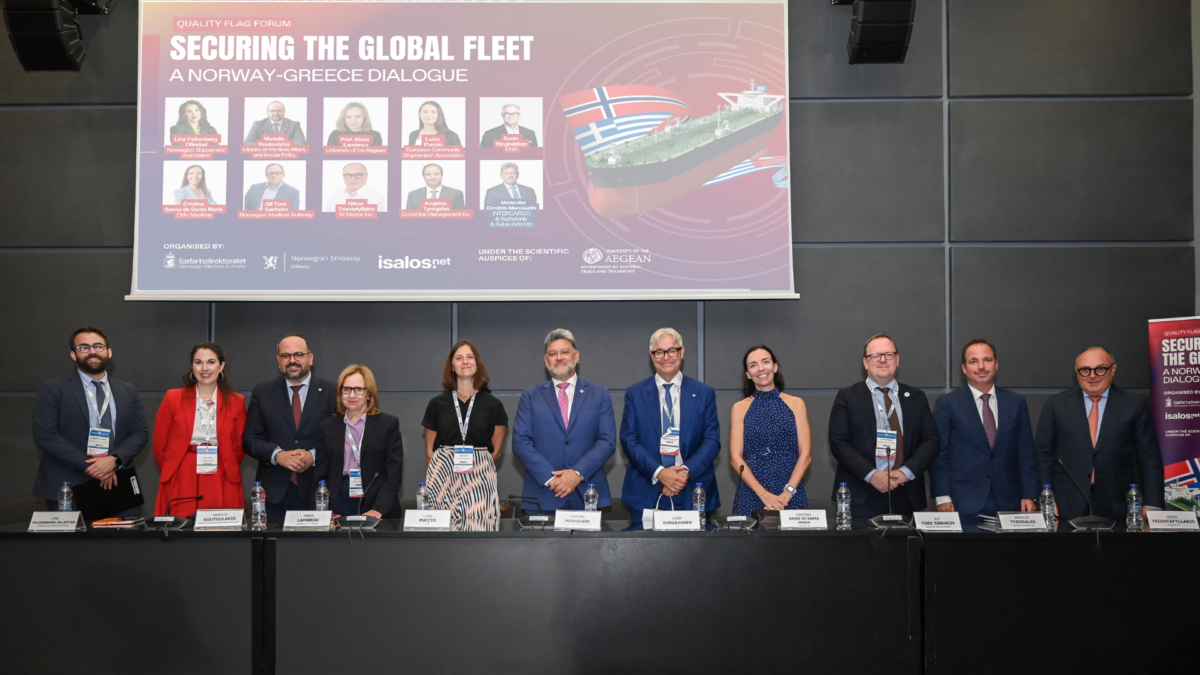
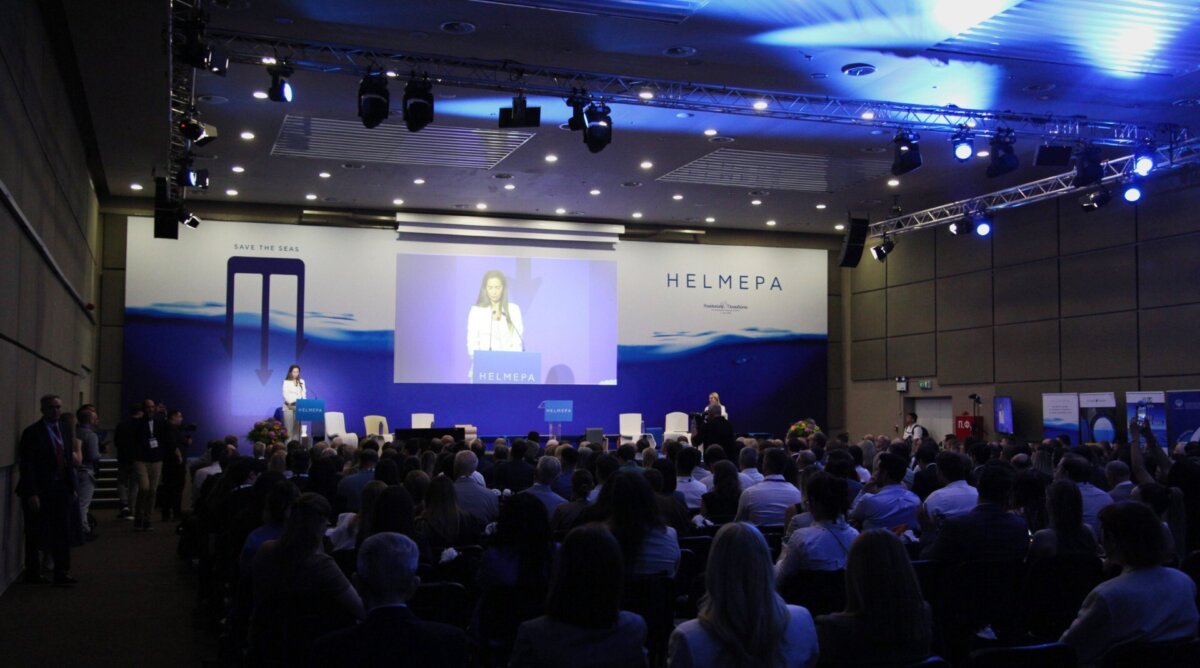
On Tuesday, 2 June 2026, the Quality Flag Forum entitled “Securing the Global Fleet: A Norway–Greece Dialogue” was held as part of Posidonia 2026, the International Shipping Exhibition.
The event was organised by Isalos.net, the Norwegian Maritime Authority, and the Royal Norwegian Embassy in Athens, and took place at the Posidonia Seminar Room Central of the Athens Metropolitan Expo exhibition centre, which once again hosted the Posidonia exhibition this year.
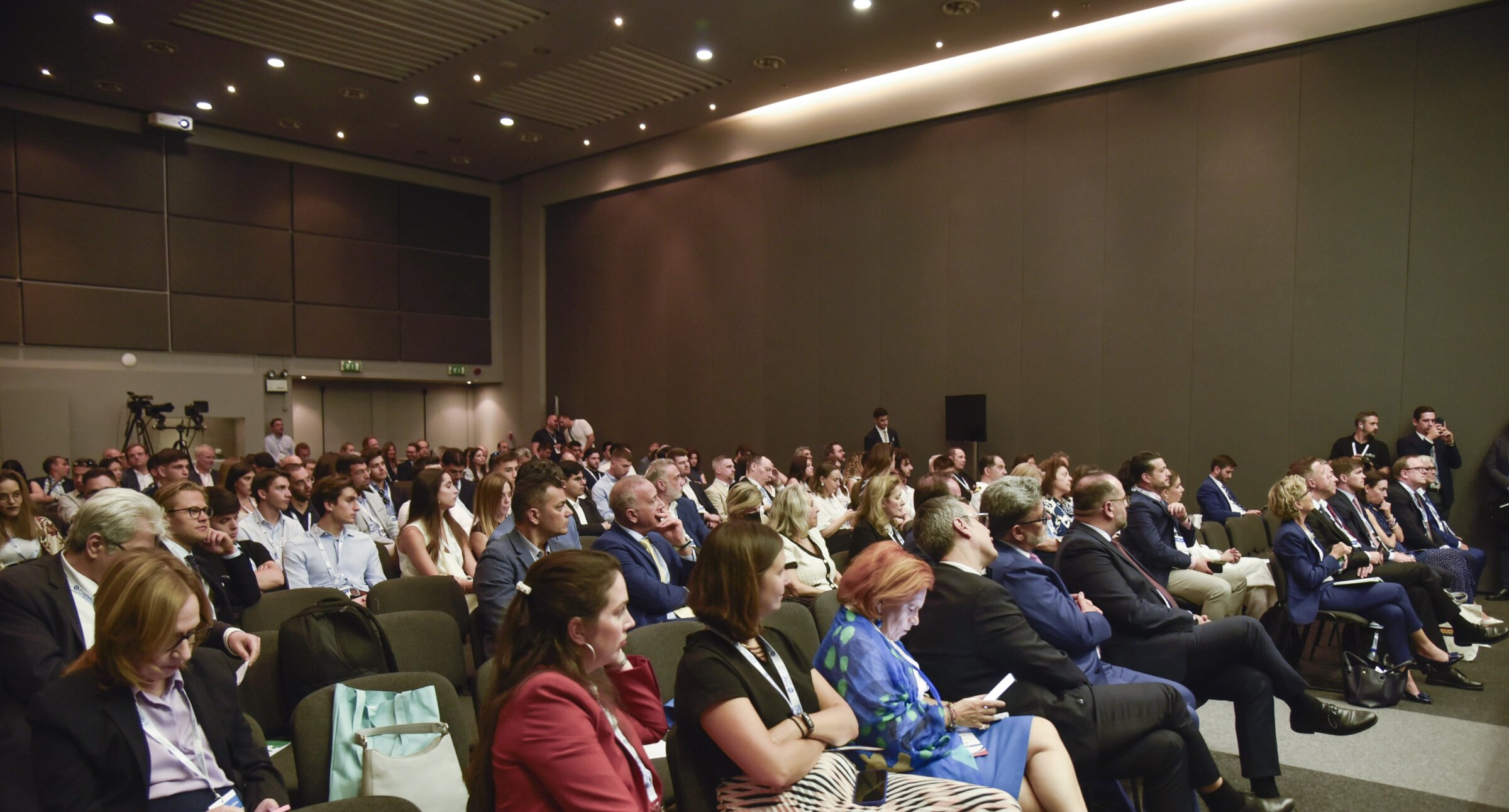
The conference, held under the scientific auspices of the Department of Shipping, Trade and Transport of the University of the Aegean, took the form of a panel discussion featuring distinguished representatives of the Norwegian and Greek maritime communities, as well as the wider international shipping industry, academia, institutional bodies, and associations.
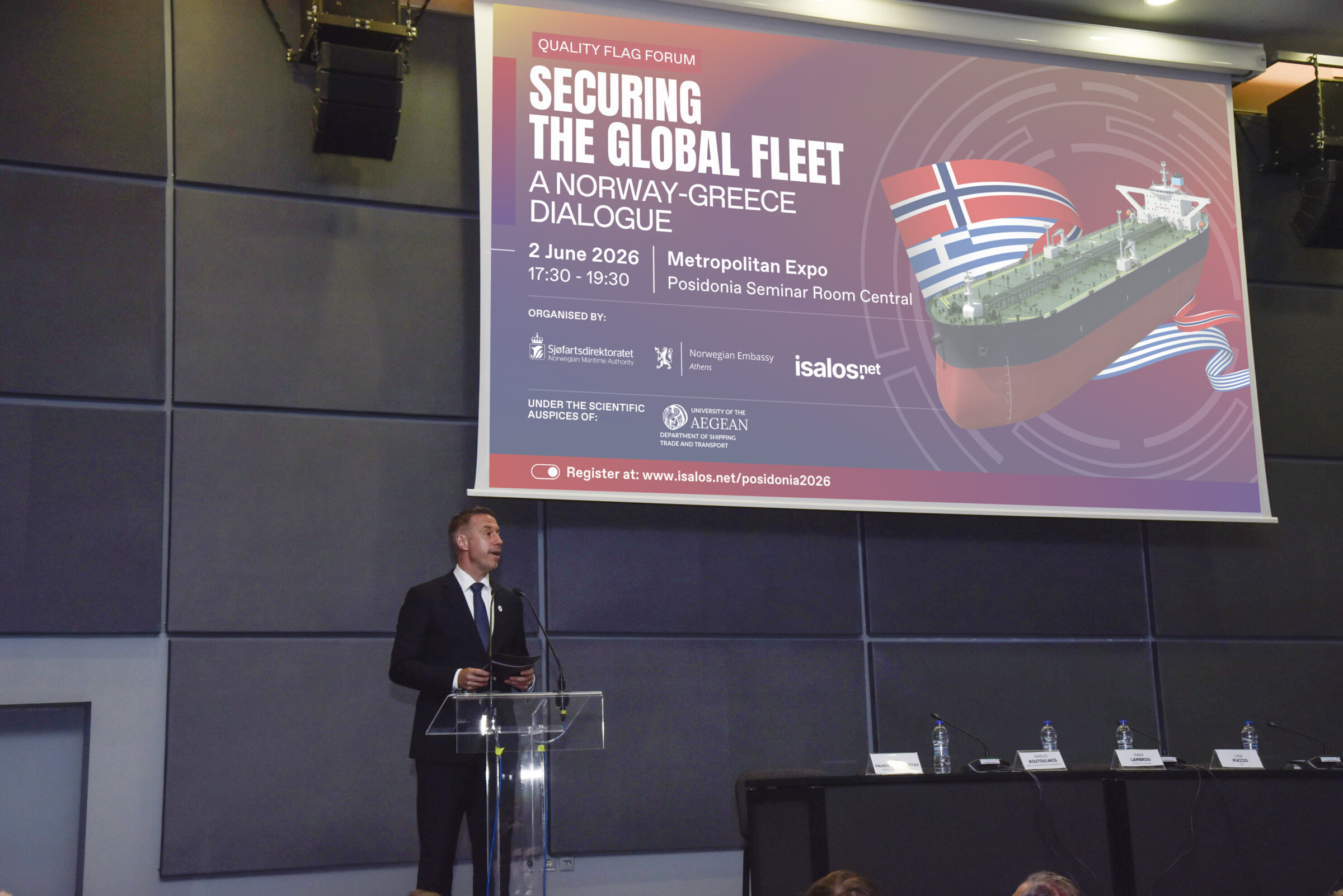
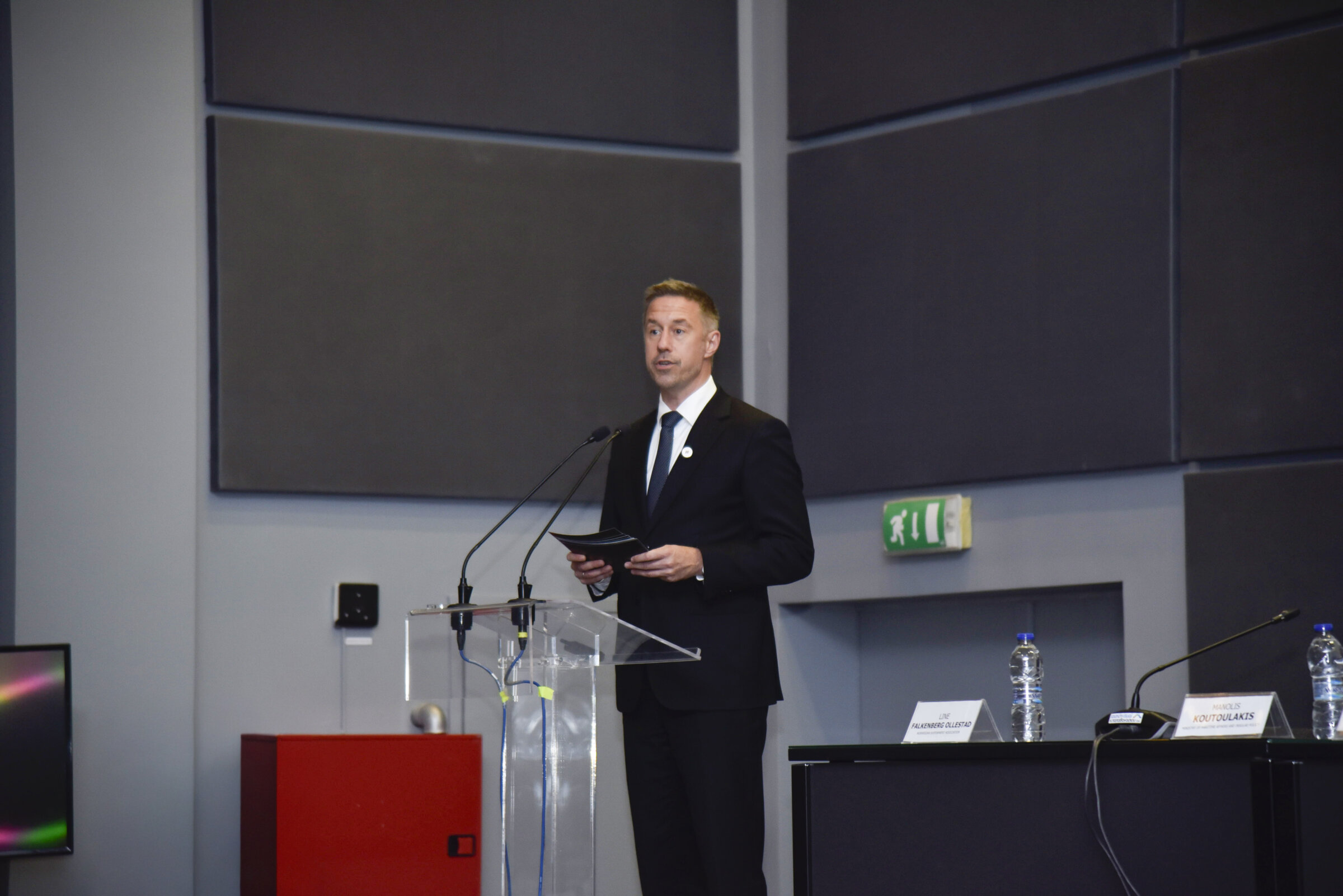
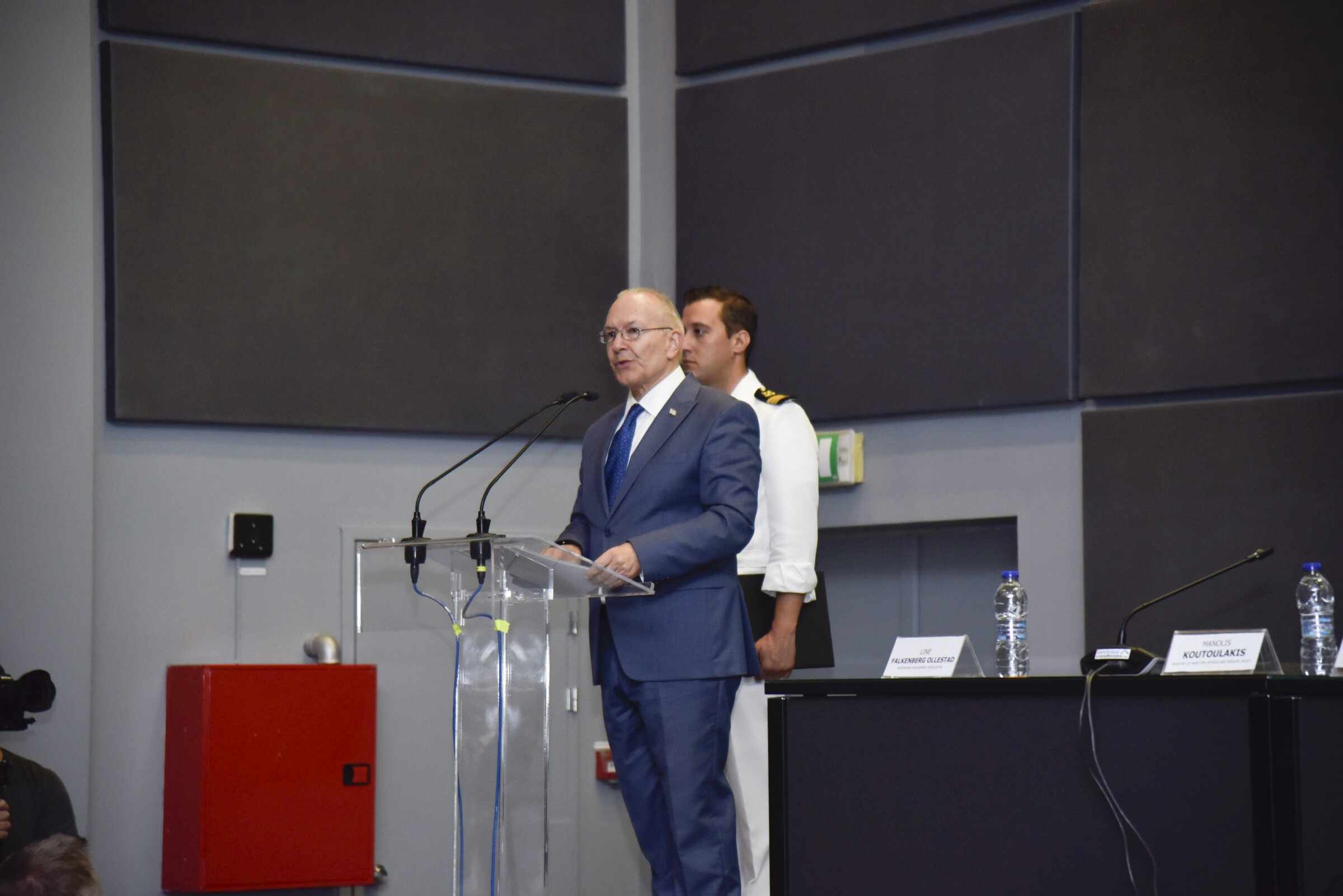
In the presence of H.E. Ms Harriet E. Berg, Ambassador of Norway to Greece, the event commenced with opening remarks by institutional representatives of both the Norwegian and Greek governments. In particular, the keynote opening addresses were delivered by Mr Even T. Sagebakken, State Secretary at the Ministry of Trade, Industry and Fisheries of the Kingdom of Norway, and Mr Stefanos Gkikas, Deputy Minister of Maritime Affairs and Insular Policy of the Hellenic Republic.
During his address, Mr Sagebakken emphasised, among other things, that:
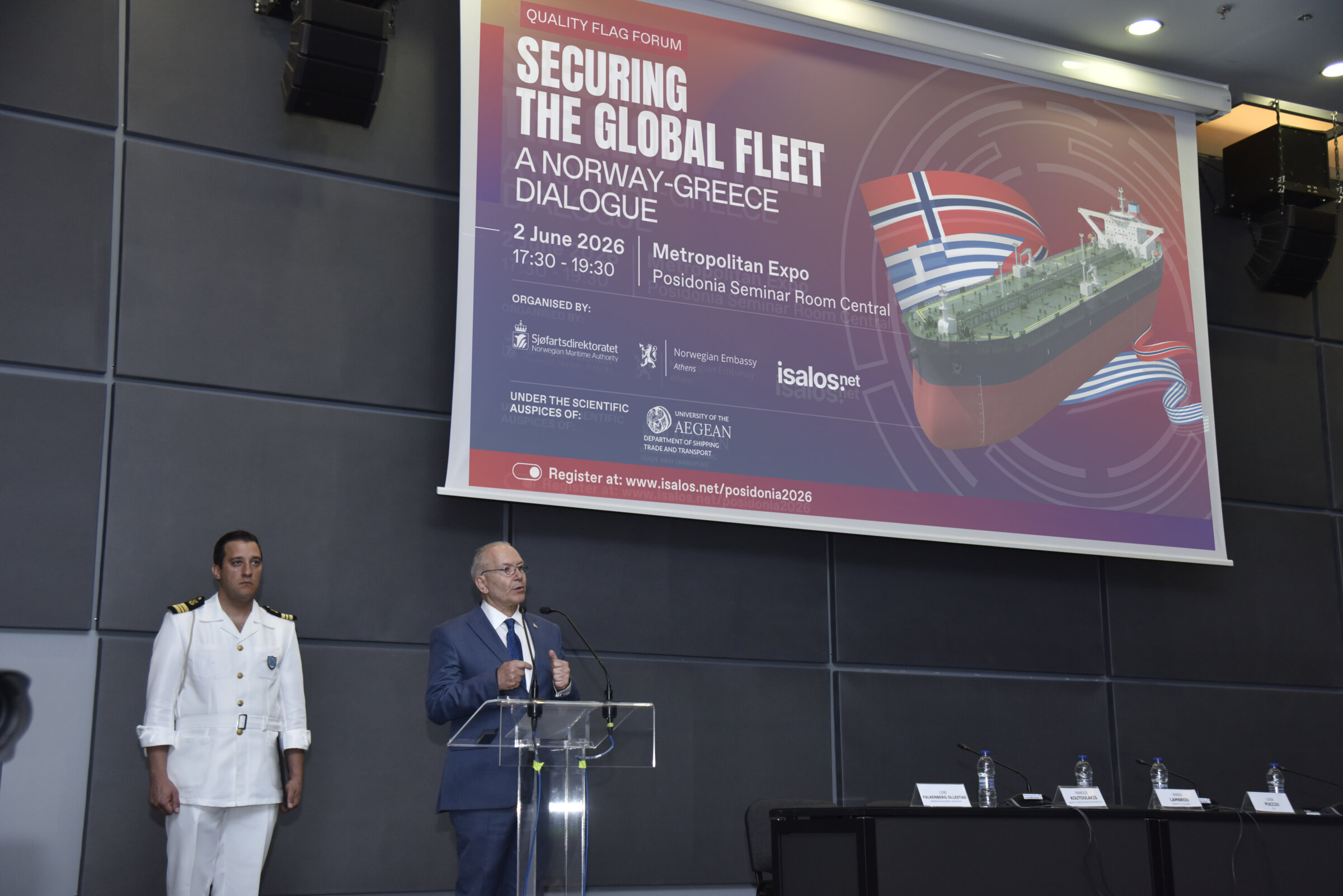
“Norway and Greece are not just comparable in their maritime weight; we are national partners. We share a commitment to a rules-based international shipping system, to the IMO as the legitimate forum for global maritime governance, and to seafarers as key workers whose rights and welfare must be protected, especially in times of conflict. The conversations we are having today on maritime security, regulatory frameworks, and the practical experience of our two industries are not theoretical exchanges. They are part of an ongoing effort to strengthen the architecture that keeps global shipping stable, safe, and legitimate”.
For his part, Mr Stefanos Gkikas stated that:
“For Greece, safety and security at sea are fundamental priorities. They are linked to the protection of human life, the safety of navigation, the protection of the marine environment and the credibility of shipping as a critical pillar of international trade and global supply chains.
In this context, we attach particular importance to cooperation with countries that possess a high level of expertise, a strong maritime administration, and a culture of quality. Norway is such a partner.
The exchange of experience between Greece and Norway can be highly valuable, both on matters of maritime safety and regulatory oversight, as well as in relation to technological transition, innovation, and sustainable maritime transport”.
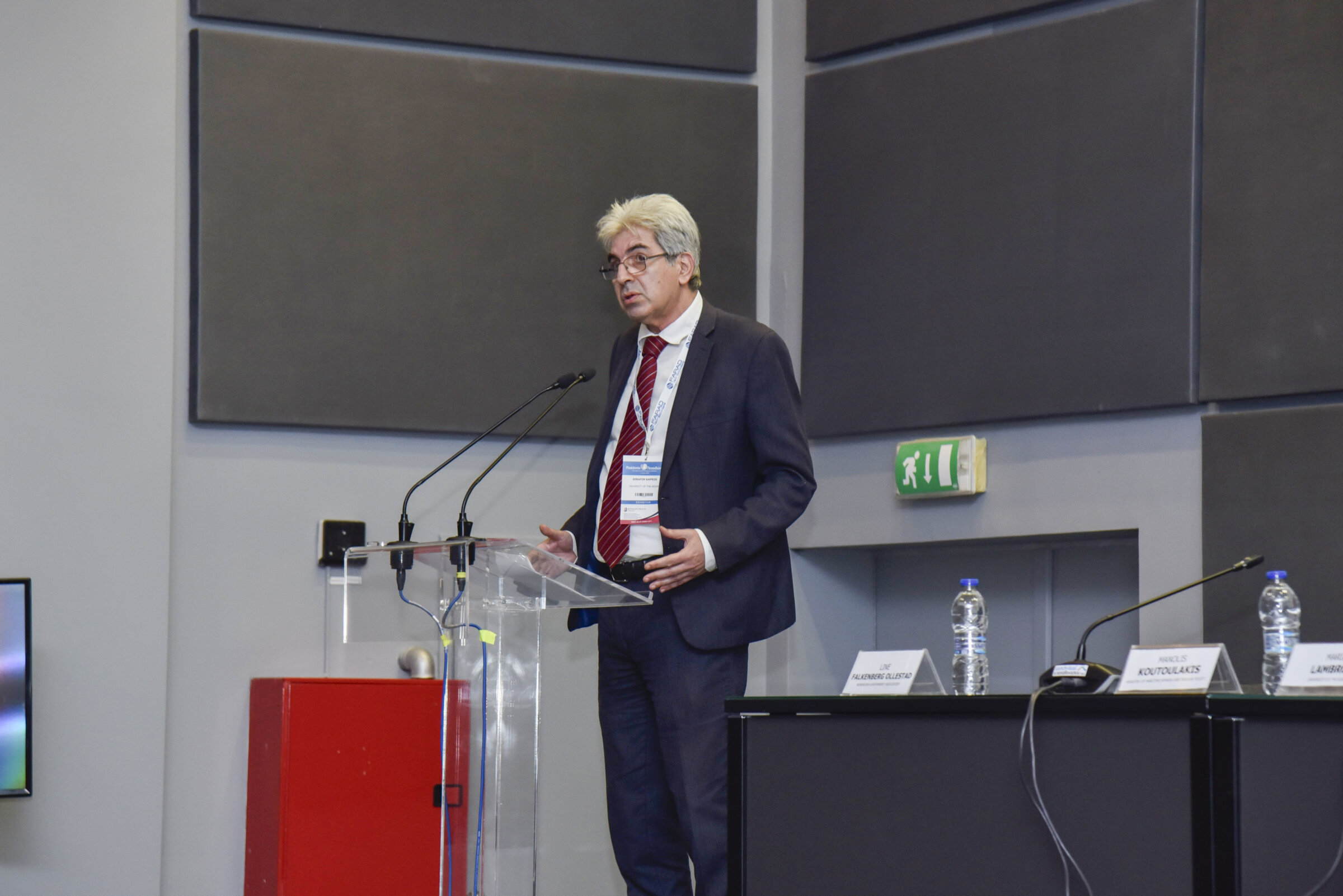
The opening remarks concluded with a brief address by Prof. Seraphim Kapros, Head of the Department of Shipping, Trade and Transport at the University of the Aegean.
Professor Kapros emphasised that: “These security challenges lead sectors in different countries to think together and find joint solutions. Ultimately, it has been realised that the human element is the highest value in shipping. I strongly believe that whenever academia, industry, and public administration cooperate, things work better. And when this cooperation extends across two or three countries, results are faster and better”.
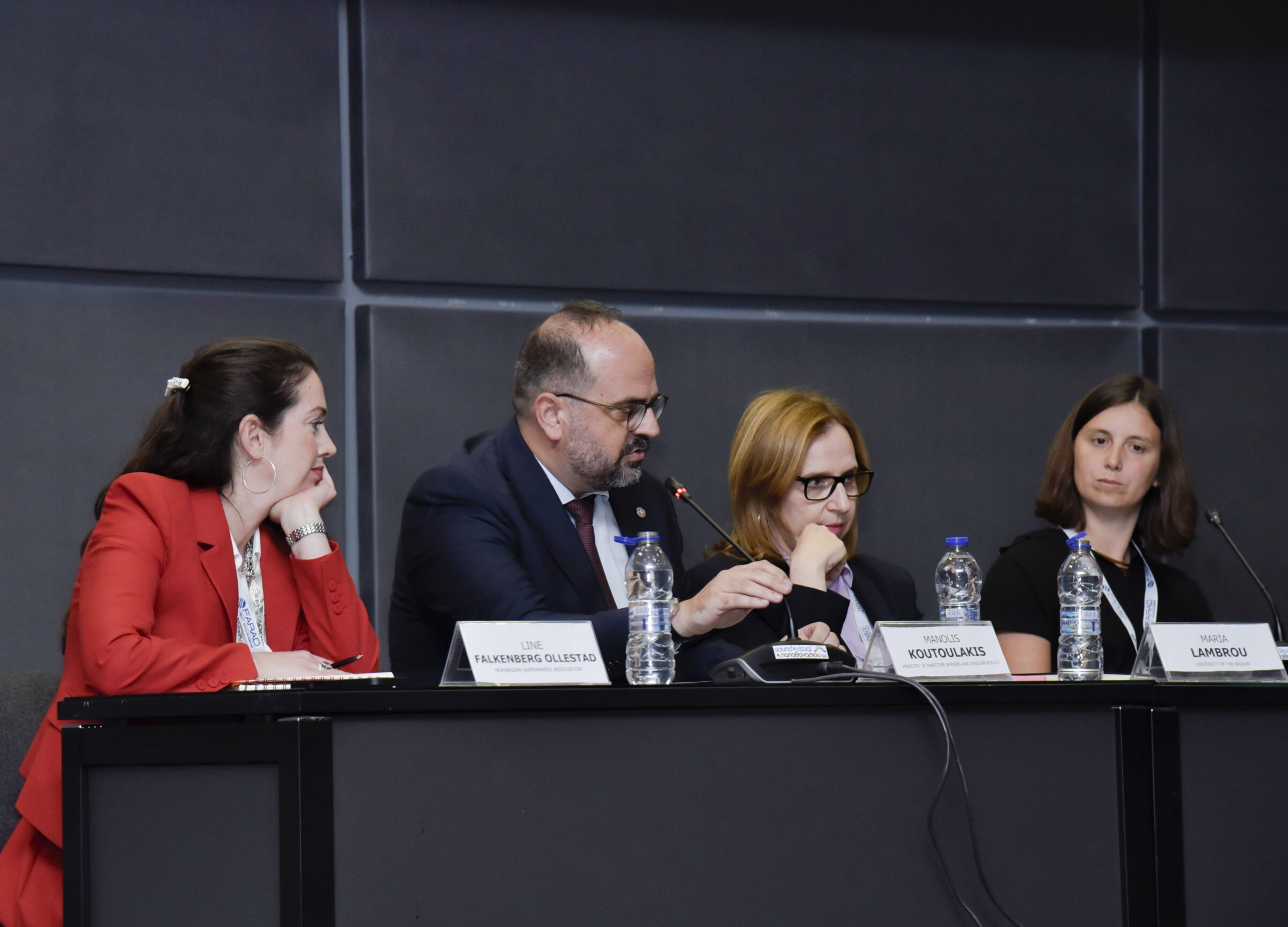
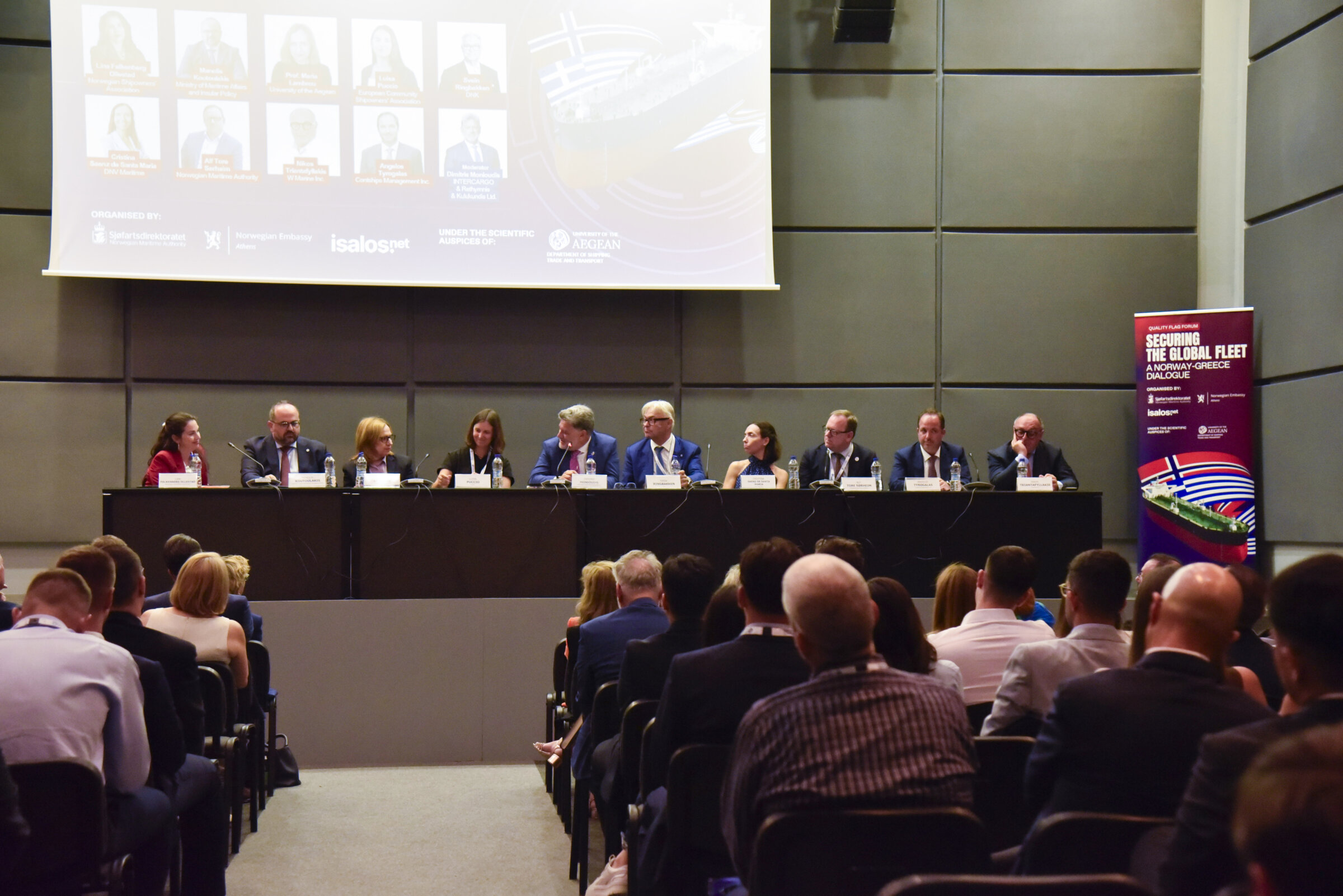
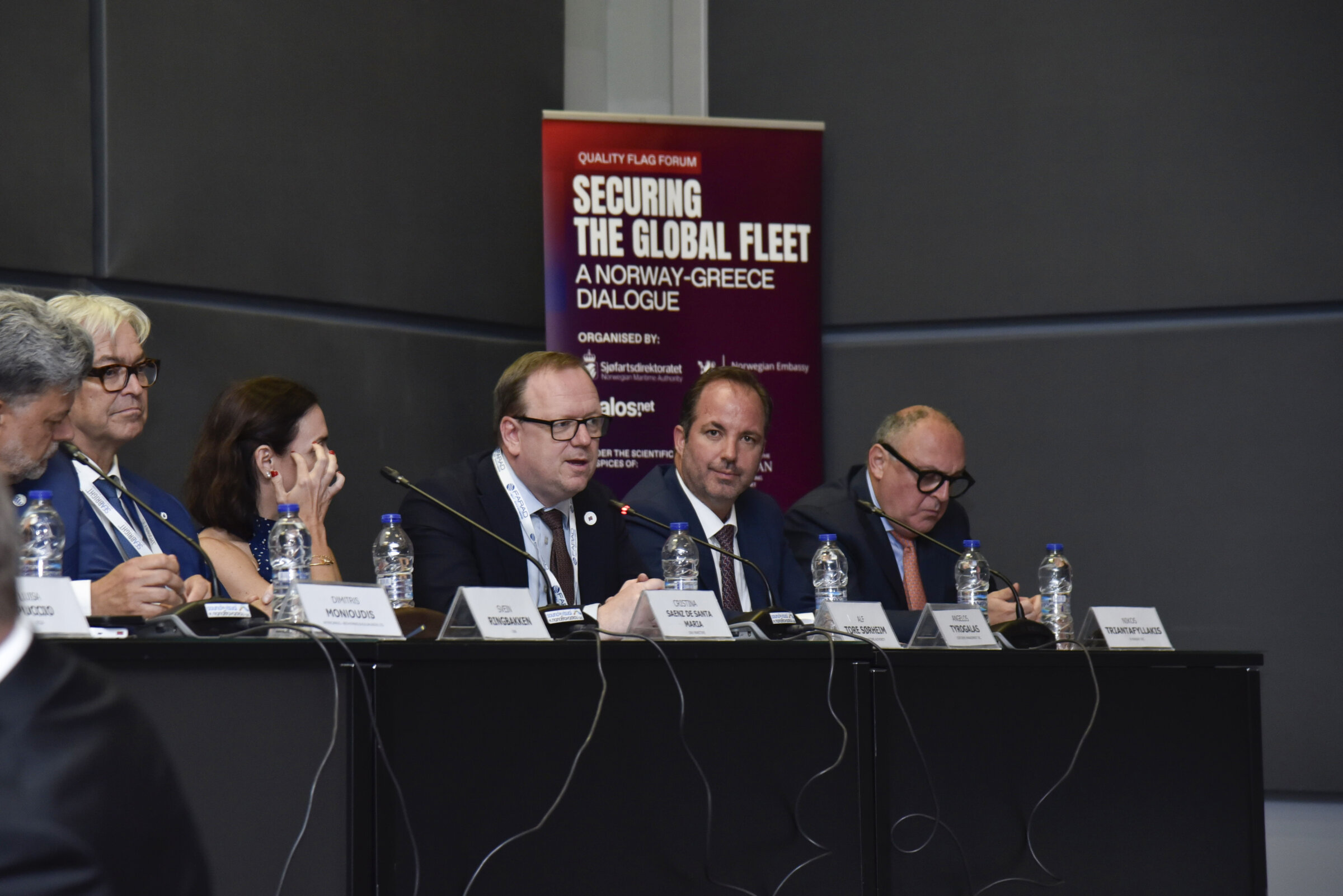
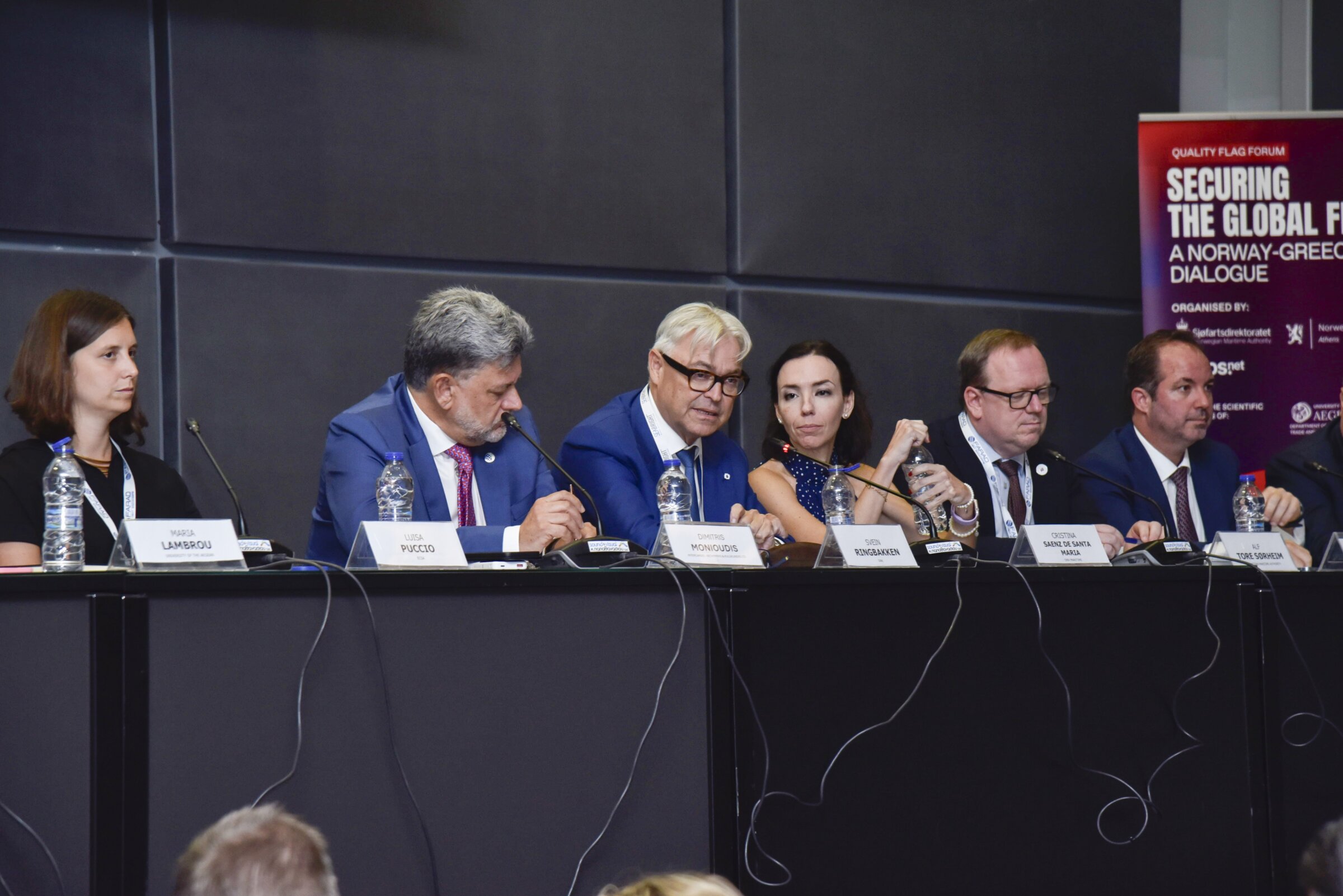
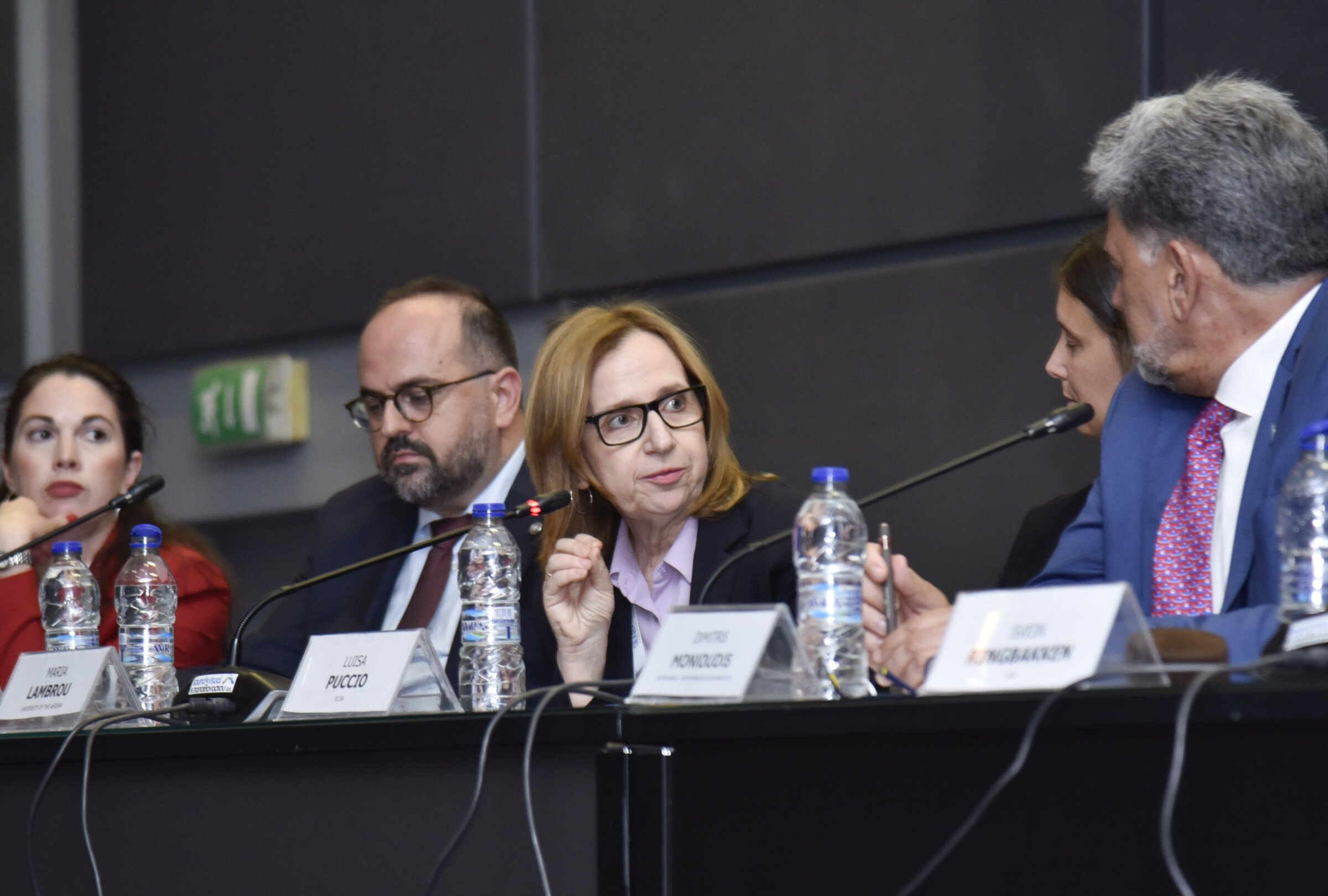
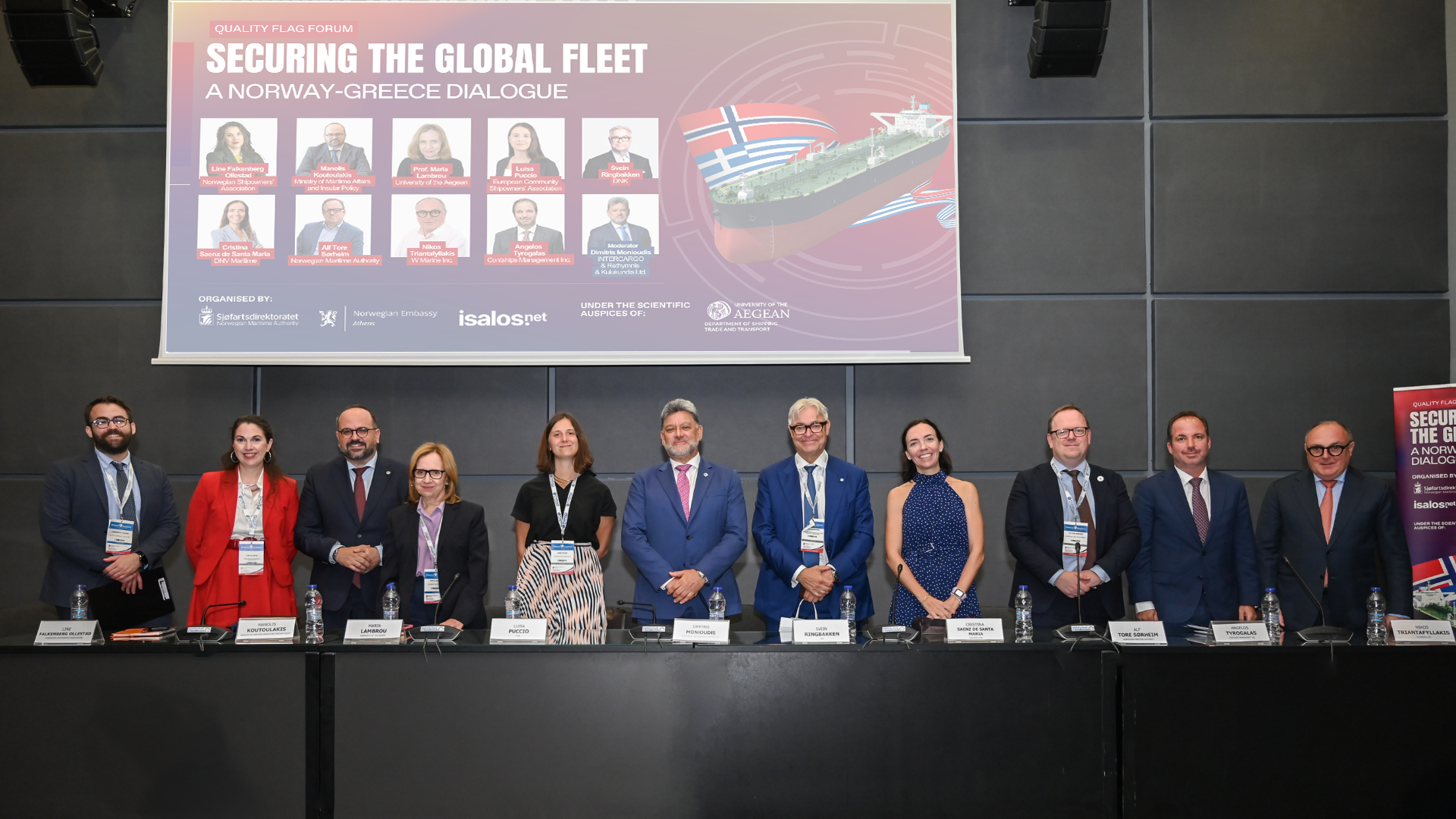
Subsequently, a thematic panel discussion took place, in which the following speakers participated:
- Line Falkenberg Ollestad, Director – Head of Geopolitics, Norwegian Shipowners’ Association
Manolis Koutoulakis, Secretary General of the Aegean and Island Policy, Ministry of Maritime Affairs and Insular Policy - Prof. Maria Lambrou, Department of Shipping, Trade and Transport, Business School, University of the Aegean
- Luisa Puccio, Senior Director, Shipping Policy & Communications, European Community Shipowners’ Association (ECSA)
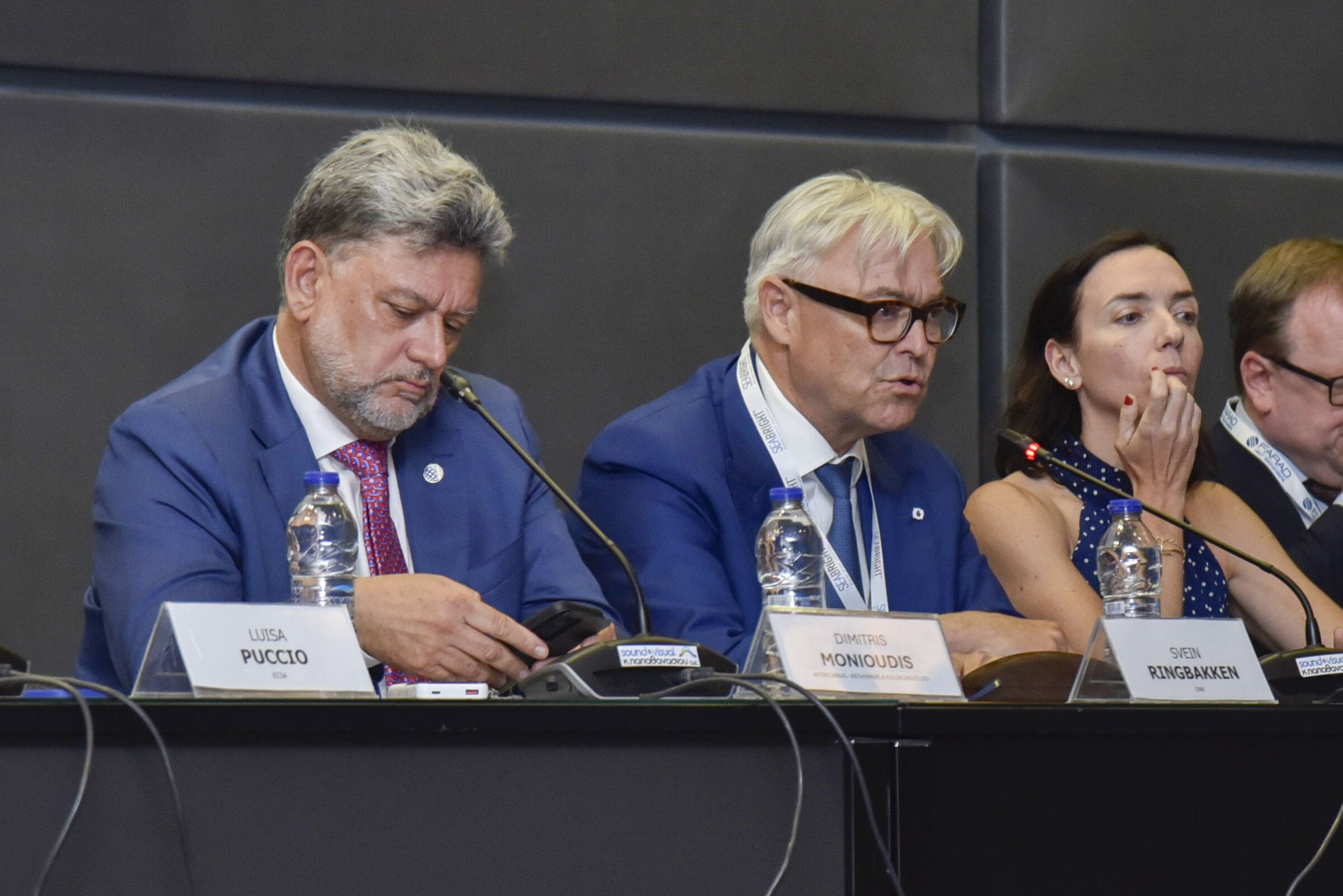
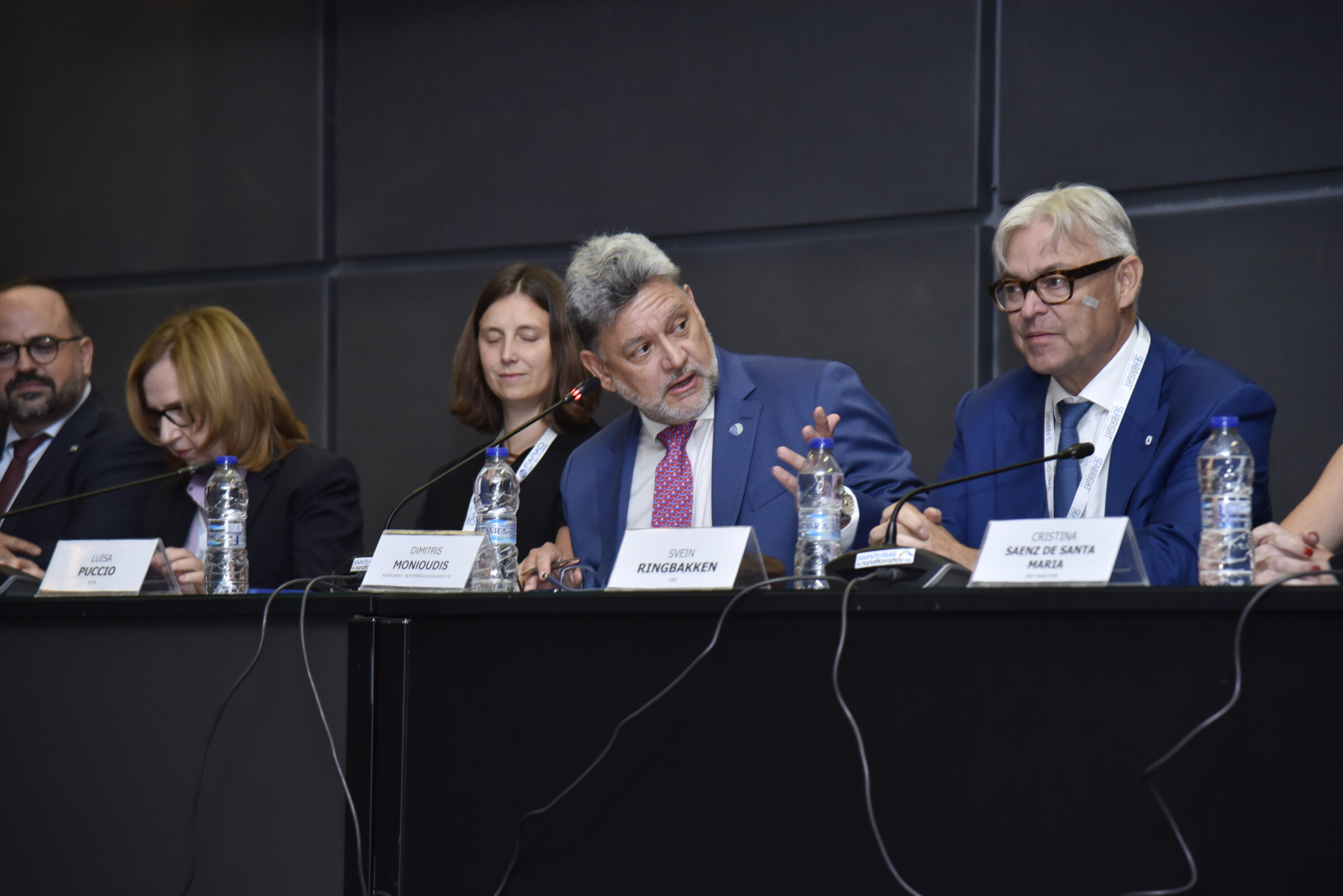
- Svein Ringbakken, CEO, DNK – Norwegian Shipowners Mutual War Risks Insurance Association
- Cristina Saenz de Santa Maria, Interim CEO, DNV Maritime
- Alf Tore Sørheim, Director General of Shipping and Navigation, Norwegian Maritime Authority
- Nikos Triantafyllakis, Managing Director, W Marine Inc.
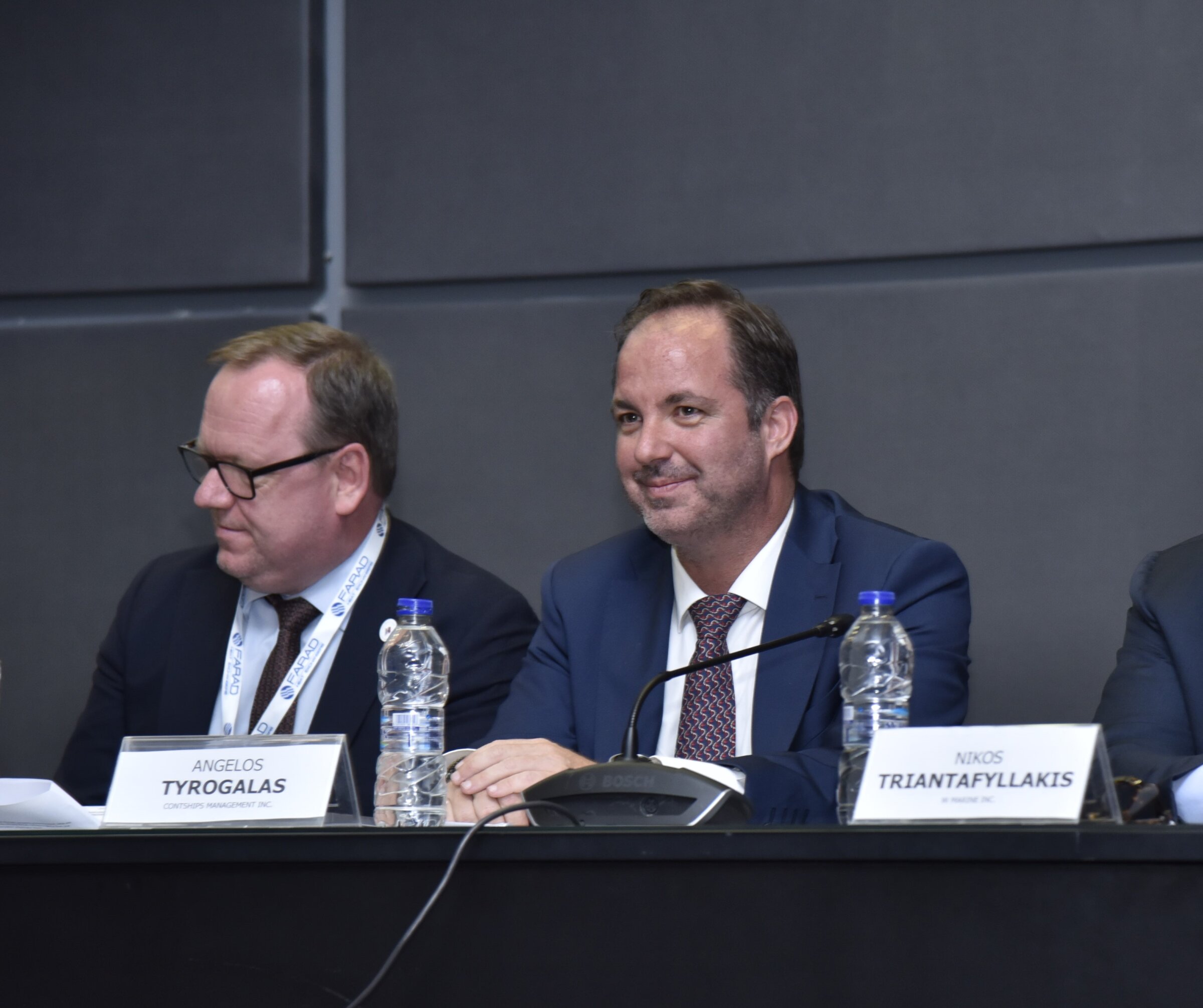
- Angelos Tyrogalas, COO, Contships Management Inc.
The panel was moderated by Dimitris Monioudis, Chairman of the Technical Committee of INTERCARGO and Managing Director of Rethymnis & Kulukundis Ltd.
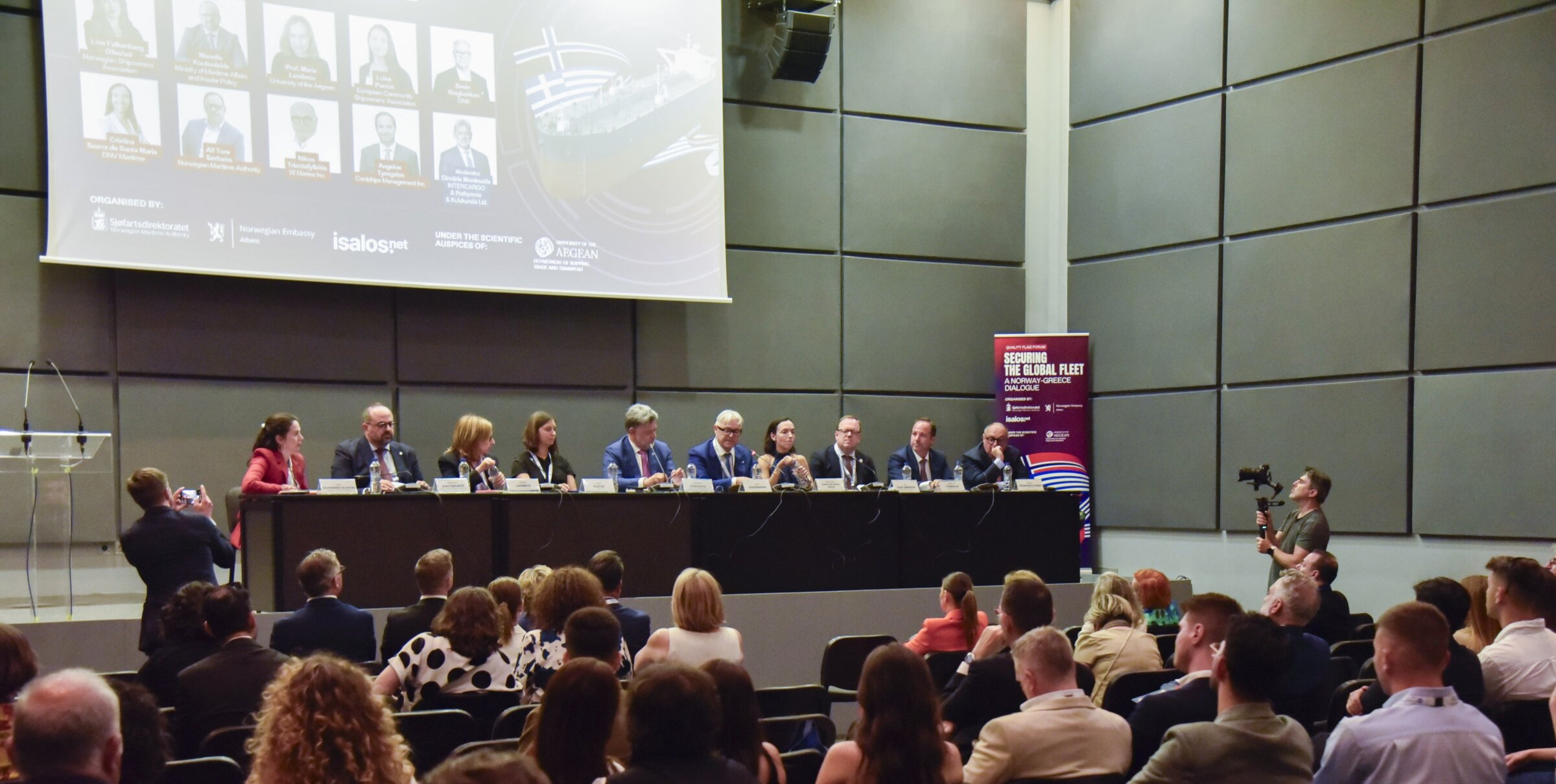
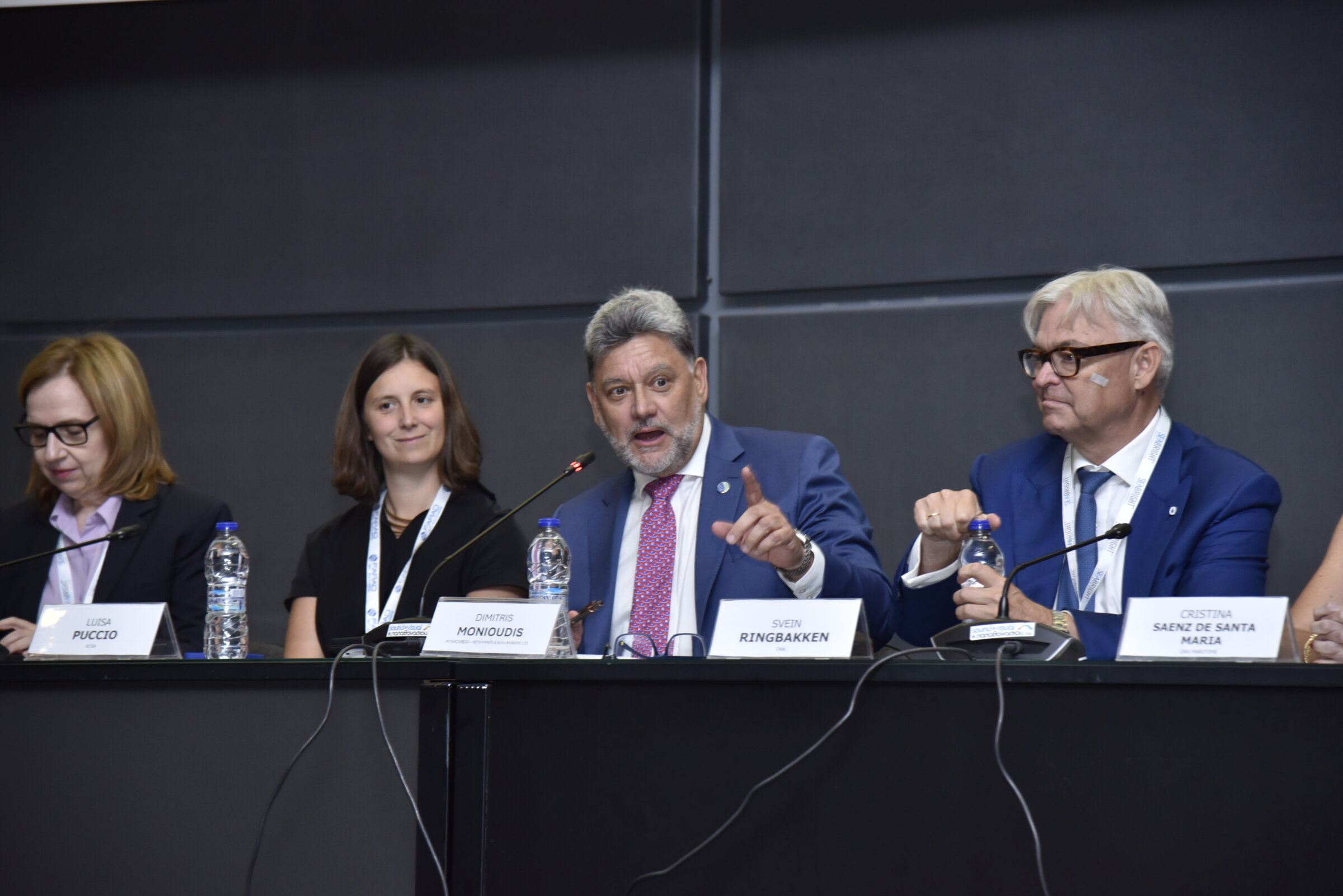
Responding to the moderator’s questions, the panellists focused on issues related to recent geopolitical developments and their consequences, the impact on the daily operations of ship management companies, the importance of international cooperation, the role of Flag States, as well as developments in the field of cybersecurity.
Is the shipping industry facing an unprecedented situation?
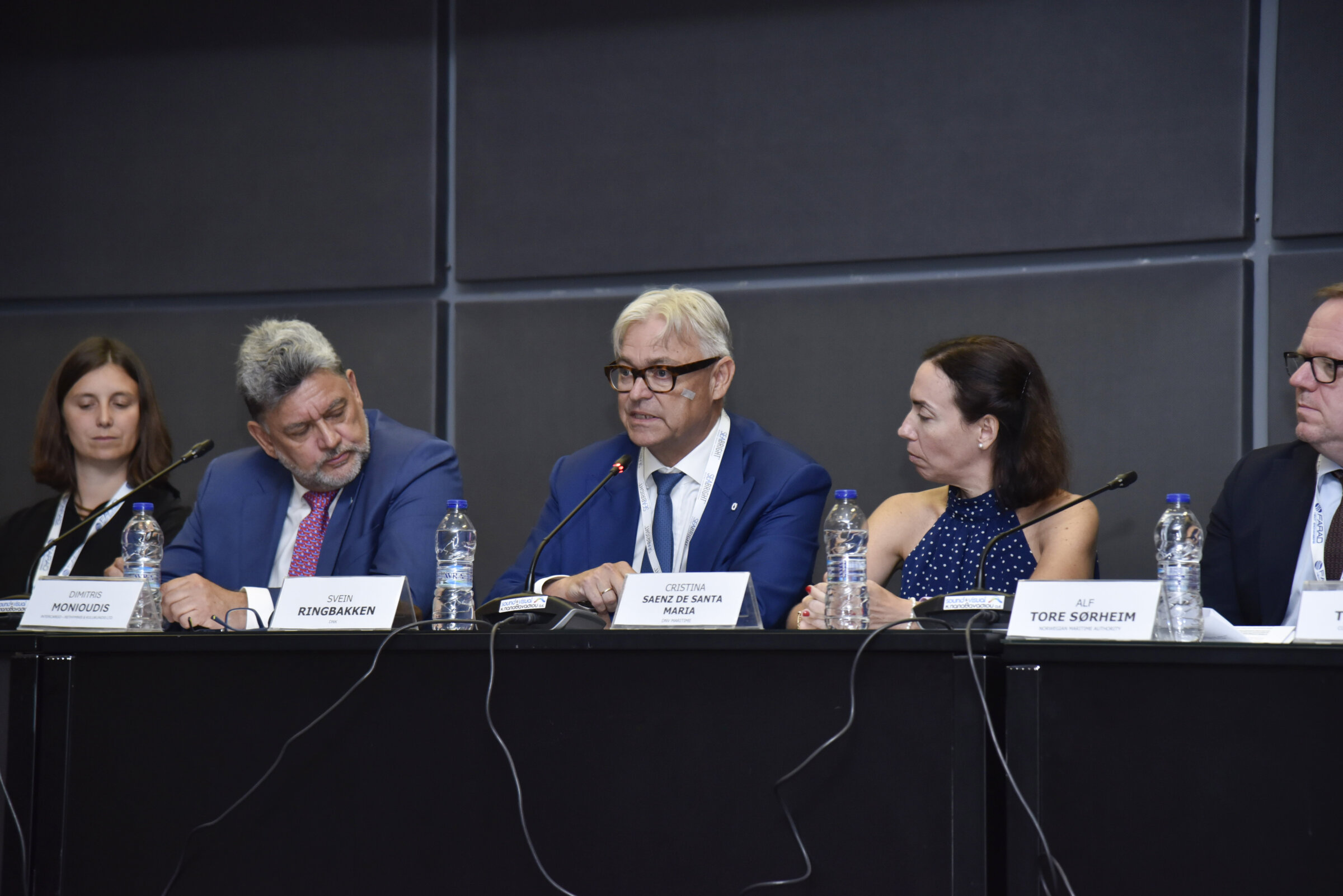
Mr Svein Ringbakken, CEO of DNK, when asked whether the industry has experienced similar situations in the past, emphasised that “what we’re seeing today is nothing like what we’ve seen in the past. Ever since the Second World War, there has been a rule-based order in the maritime domain, allowing ships to trade in relative peace. If you look at the picture from, let’s say, 2019, with the attacks in Fujairah and the Strait of Hormuz, or in 2022 with the war in Ukraine, and then in 2023 with the Houthis, the oceans have become an arena of major power conflict. So basically, our industry is operating across the oceans, and the maritime industry has become a target. And you can see this across regions, from the Arctic in the North to the South China Sea. I think that is a very worrisome development. We should keep that in mind and not focus solely on the current situation in the Gulf. It is bad – really bad – but it is part of an ongoing trend, and unfortunately, it does not look good going forward”.
Are industry developments always one step ahead of international regulations?
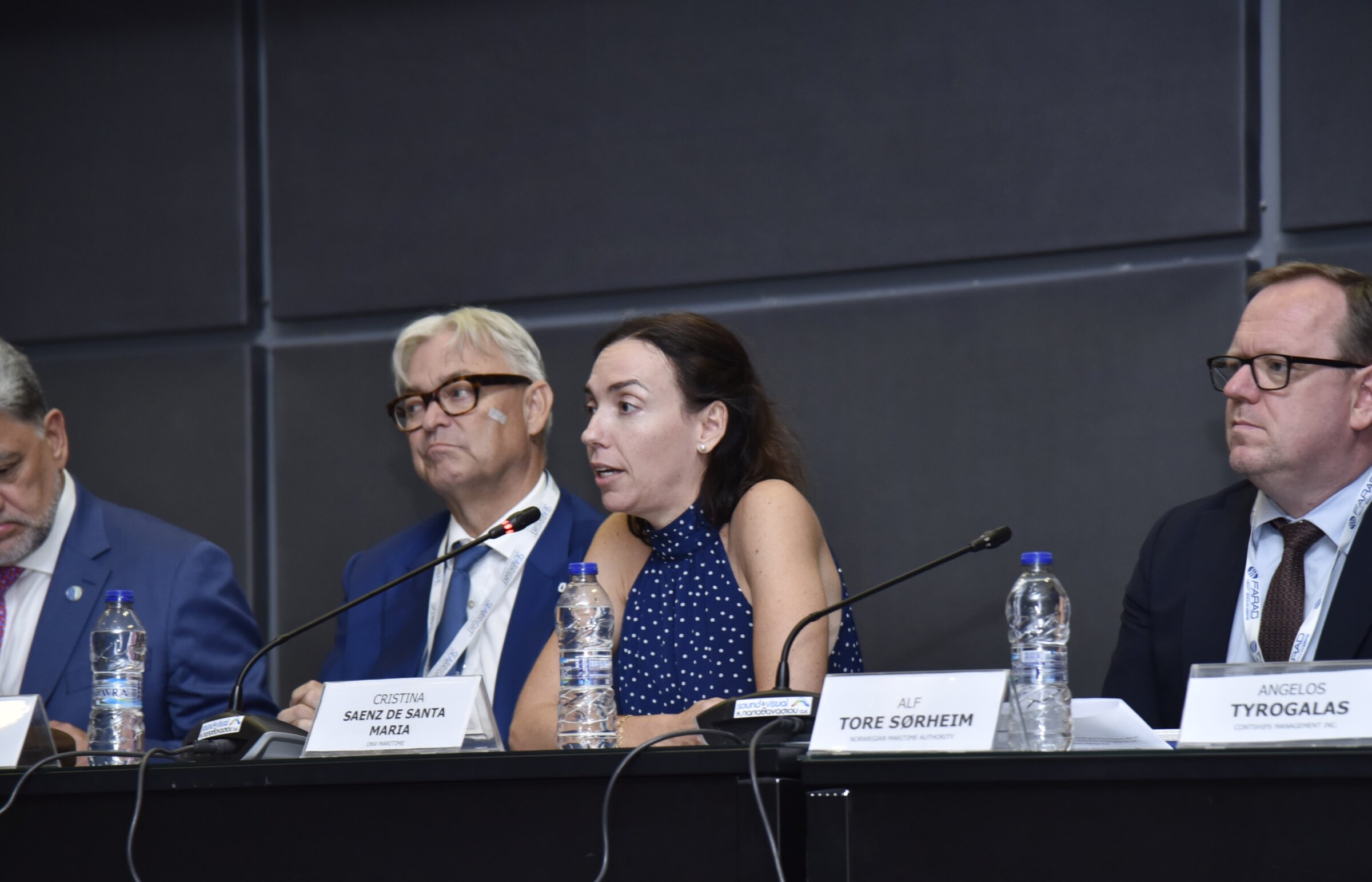
Ms Cristina Saenz de Santa Maria, Interim CEO of DNV Maritime, when asked whether international regulations are always one step behind industry developments – especially in technological matters – stated that “the regulatory framework needs to be more robust, especially from the cybersecurity aspect, which is never-ending and evolving in the sense that connectivity, interoperability, and integrated systems continue to develop. This obviously brings many opportunities for the industry, but it also means that threats will continue to evolve as well. So, it is going to be a challenge for the regulatory framework to keep up. I think it is very important to have a solid foundation in terms of that regulatory framework and governance. I believe governments will play a key role, and a standards-based framework is essential, because that is the foundation for all of this. It is a complex matter, but it is here to stay, and we just need to handle it”.
How do ship managers deal with intense geopolitical developments?
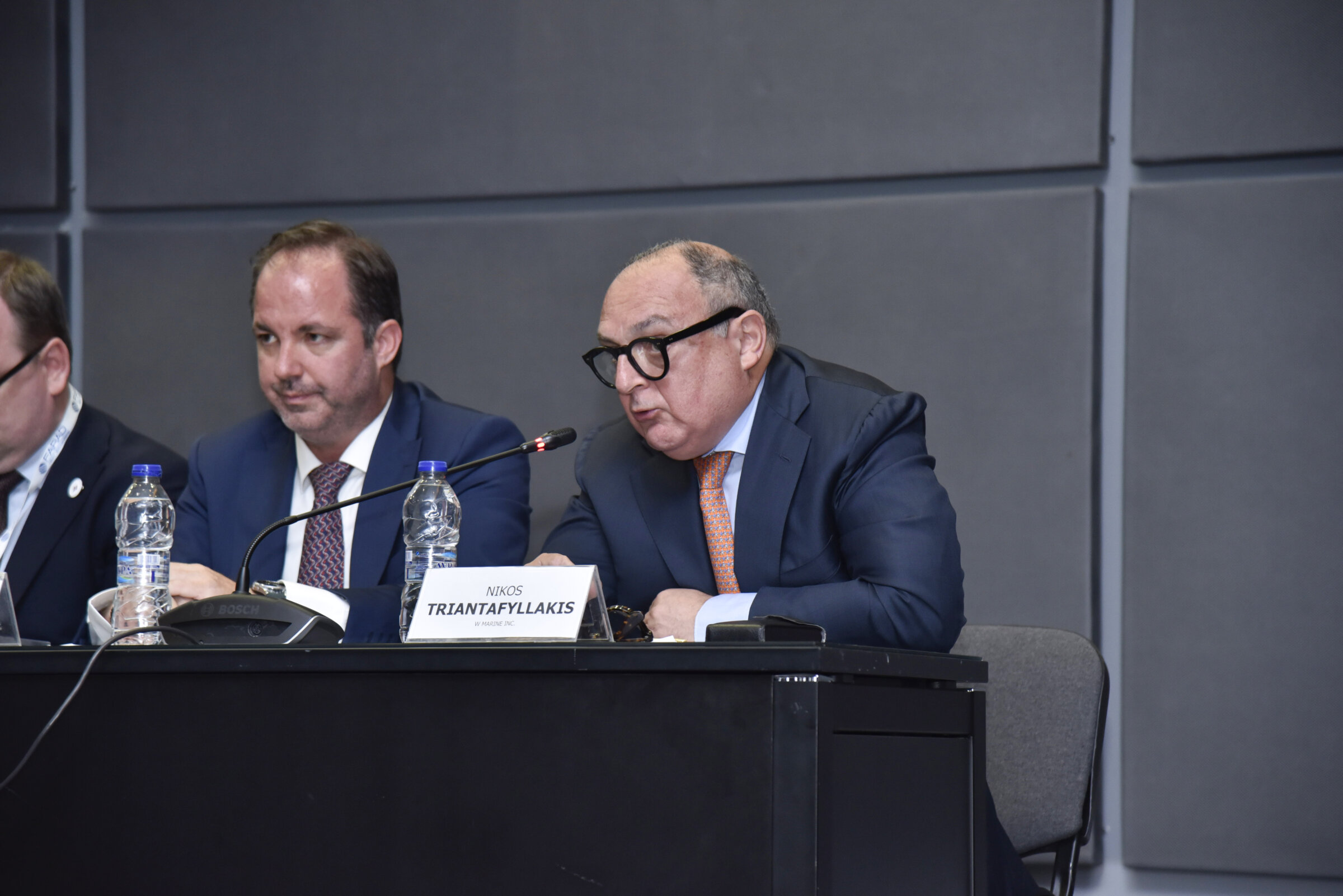
With the discussion turning to the sustainability of shipping companies, which are required to make decisions with an emphasis on the safety of both seafarers and vessels, Mr Nikos Triantafyllakis, Managing Director of W Marine Inc., underlined that “what we’re going through right now is a very violent reshuffling of world power. Things are changing at a very dramatic pace. As far as running companies is concerned, our priority is seafarers. Of course, there will be more people on board – our most precious asset. So, what we’re trying to do is keep them ahead of all the latest information. We also try to be flexible with our charterers and end users to make sure that we avoid loopholes. It’s something that we cannot, unfortunately, put down on paper. It’s a very fluid situation; it changes practically from day to day. But this is our business, and we’re going to deliver safely, efficiently, and reliably. Our task is to make sure we try to find the best possible solutions out of all the difficulties that we face”.
In response to the same question, Mr Angelos Tyrogalas, COO of Contships Management Inc., pointed out that “we’ve seen this happening before, and we are actually seeing it escalate. When it comes to the normal cycle of supply and demand or geopolitical events, which was always the explanation for any crisis shipping was facing, now there is another layer added. Shipping has the flexibility to ride this cycle, as long as we stick to core values – talking to the crew, as Mr Triantafyllakis also mentioned, and having the utmost respect for our seafarers – and are able to adjust on the commercial front. Because at the end of the day, all of this adds cost. The end user will probably face it, not in a like-for-like or immediate way, but it will end up there. Until then, it’s an effort for all of us on a day-to-day basis – not remaining static and being very careful to adapt to whatever new threat emerges next to us”.
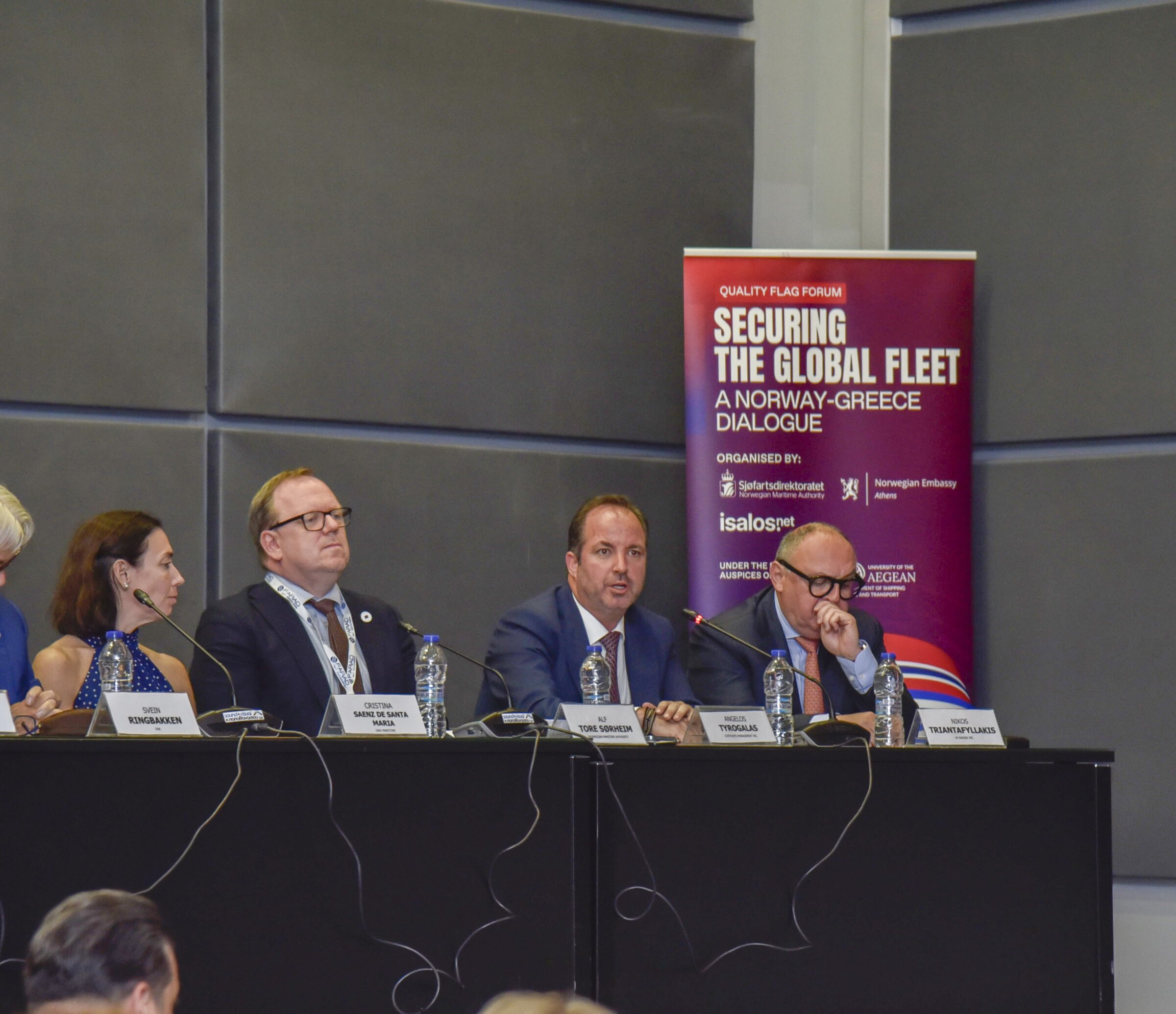
Flag States and safety of navigation
For his part, Mr Alf Tore Sørheim, Director General of Shipping and Navigation at the Norwegian Maritime Authority, when asked what Flag States can do to help strengthen resilience against all these emergency security risks, stated the following: “The most important work that we as quality Flag States must do is actually to do our job: make sure that ships meet high standards through surveys, that they are certified, that seafarers are also qualified and certified, and make sure that only safe ships sail. As a Flag State, we also have a responsibility to set a security level in areas where there are conflicts or wars, and to ensure good cooperation – making sure that we get the necessary information and take the best actions based on it. So, cooperation with seafarers’ organisations, shipowners, and other countries is also important, so that we can provide shipowners and seafarers with the information they need to make the best possible decisions. A third point I would like to bring forward as a responsibility of a Flag State is using our voice within the international community and at the IMO. So, if there are lags when it comes to guidance, regulations, or other areas, we must use our voice”.
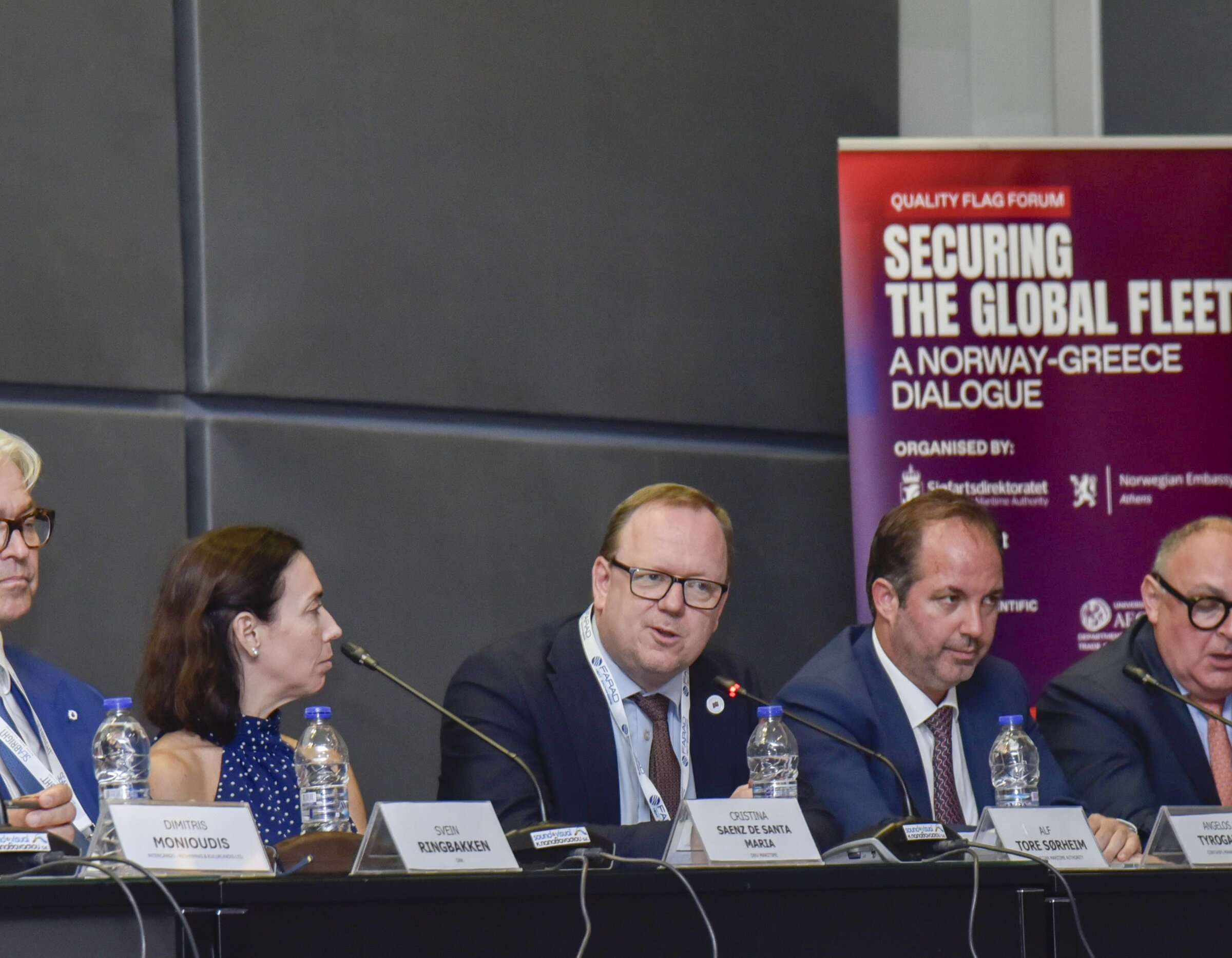
International cooperation and “respecting the rules”
During the discussion, Mr Monioudis raised the question of whether the various stakeholders in the shipping industry are doing enough to ensure freedom of navigation and maritime trade. In this context, Ms Line Falkenberg Ollestad, Director – Head of Geopolitics at the Norwegian Shipowners’ Association, commented as follows: “That’s a big question: are we doing enough? I think, given the world that we’re in right now, maybe not. Right now, we’re seeing one big superpower in conflict with another, keeping straits closed and leaving many of our vessels – including Greek and other international vessels – restricted. And we’re in a situation where people are talking about paying tolls to transit strategic straits. This is something that our members oppose, and we hope we don’t get into a situation where such measures become necessary, because they fundamentally undermine the rules, regulations, and the international order that our members and the Greek shipping community depend on and that we all need to safeguard in a much better way. We depend on other countries respecting our Flag states and adhering to the rules and regulations that we rely on so that our ships can operate globally. Therefore, a lot still needs to be done, and we must continue to uphold international cooperation, because we are seeing that certain nations are not respecting it the way they should”.
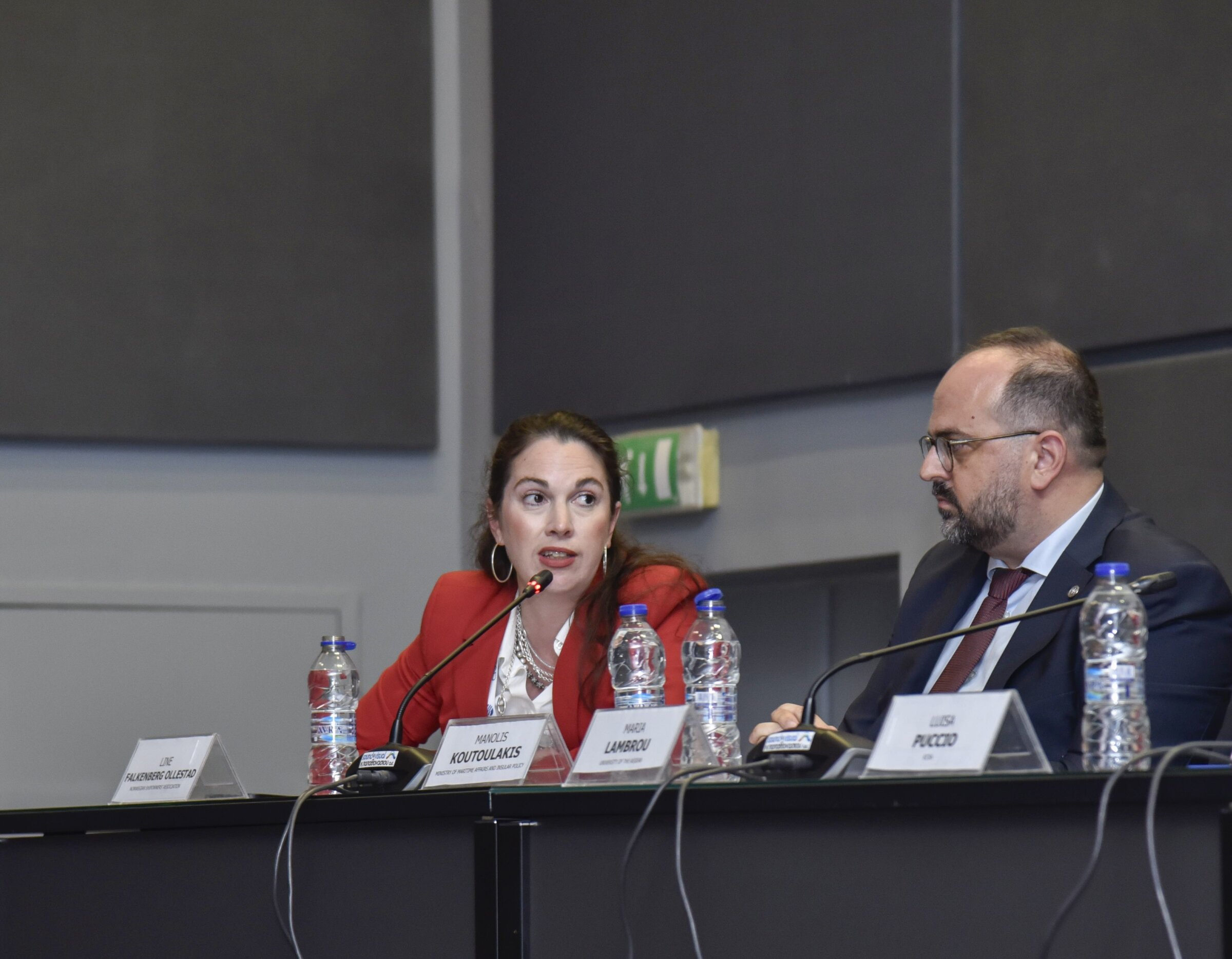
Representing the European Community Shipowners’ Associations (ECSA), Ms Luisa Puccio, Senior Director of Shipping Policy & Communications at ECSA, responded to the same question, underlining that: “There has always been a shared understanding of the importance of the principle of freedom of navigation. This is something that, as a community, we have been very vocal about, and that we must continue to uphold and protect. One point that is sometimes missed at the European level in this debate about the war and how things are changing is that we see a lot of protectionism emerging in the world. Of course, we’ve seen this in the US and other countries. And Europe actually relies on trade much more than some of our competitors, like the US and China. Our trade depends on competitive shipping, and by competitive shipping, we mean safe and secure shipping. So, of course, when it comes to our collective voice in Europe, it’s not just about the high-level principle of freedom of navigation per se, but also about how we bring forward the fact that free trade, smooth trade, and secure trade are essential to Europe’s well-being”.
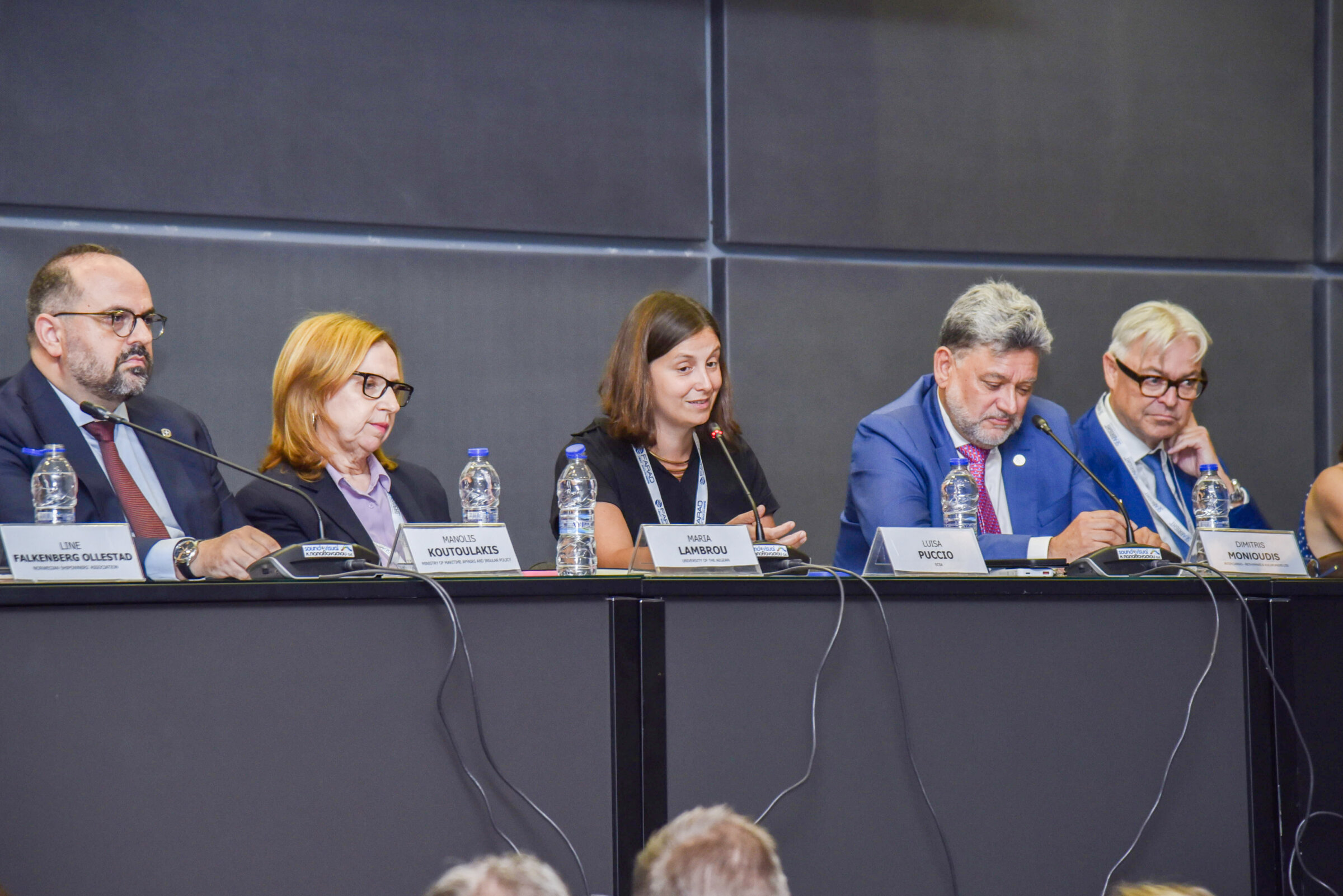
A stable regulatory framework and the need for investments
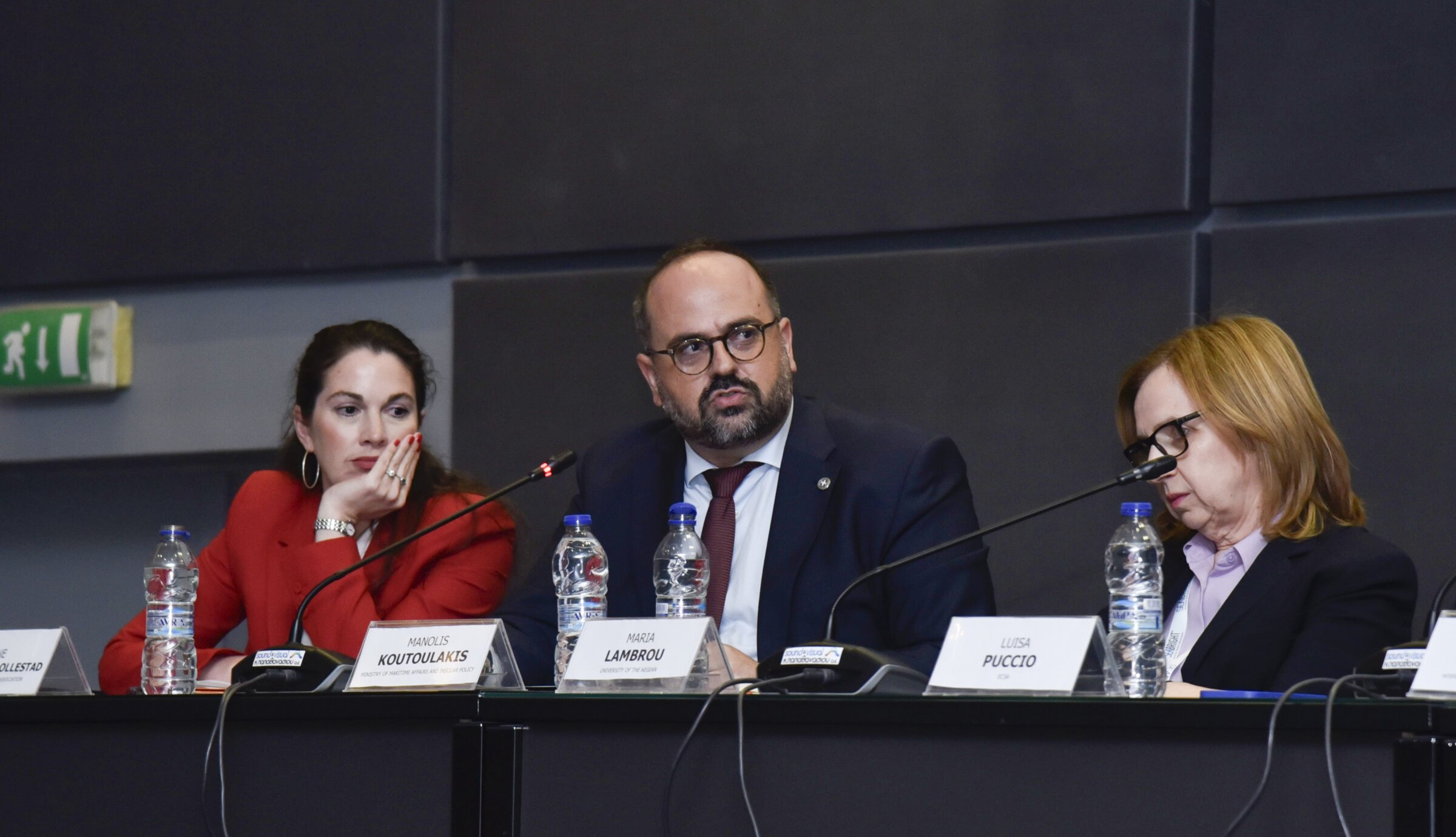
Mr Manolis Koutoulakis, Secretary General for Aegean and Island Policy at the Ministry of Maritime Affairs and Insular Policy, responding to a question on whether fragmentation arising from the lack of alignment between international and European regulations, particularly with regard to the decarbonisation of the shipping industry, can be avoided, emphasised that “shipping is global by nature, so regulation should be as globally aligned as possible. We need stronger alignment within the IMO. Regulatory stability is essential for investment. We have seen that instability in regulation can create turbulence. This also applies to short-sea shipping and ferries, which is a domain we should discuss more – possibly transferring knowledge and building joint cluster approaches, which are very important for both countries”. The Secretary General also added that “we need to ensure that decarbonisation revenues are reinvested into shipping. There is also space to discuss how to support SMEs, because while we are proud of the large companies, many SMEs operate within the ecosystem, especially in ferries and short-sea shipping, and they must be supported in this transition”.
Government initiatives and cybersecurity
Professor Maria Lambrou, from the Department of Shipping, Trade and Transport at the University of the Aegean, was invited to comment on the initiatives that governments should undertake to protect the shipping industry during periods of intense geopolitical turbulence. According to Prof. Lambrou, “governments have different roles and different capacities. They act as Flag States, as regulators that must amend and transpose regulations, and as ecosystem members. These are their primary relevant roles in coordinating or promoting cybersecurity policies and postures, which is actually the preferred term in cybersecurity. Before that, I think we need to emphasise and realise that in terms of regulations and regulatory frameworks, we already have enough.
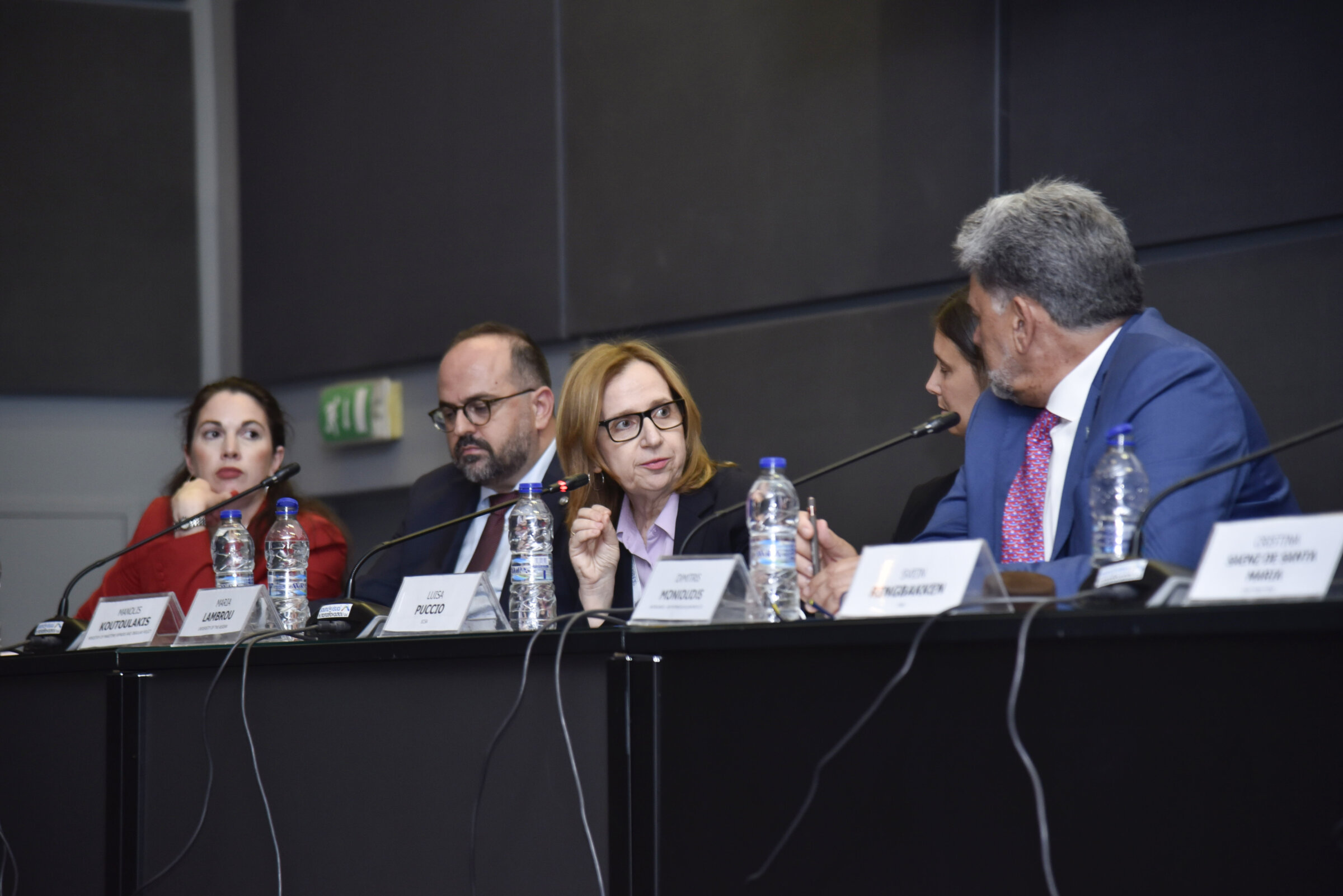
I go back to the much-discussed NIS2 Directive and other EU acts. These are very thorough cyber risk management-oriented frameworks that governments need to integrate and use to support shipping companies and shipping clusters in further adoption and implementation efforts. They are powerful tools and instruments at governments’ disposal to support their shipping communities. As Flag States, there is a huge difference between countries such as Norway and Greece, as they have different doctrines about maritime strategy and how it interacts with digital strategy, as well as what digital sovereignty might mean for each government. This is a very complex landscape. The policies of different governments vary a lot, but the operational standards and the common orientation towards what a cyber-resilient posture is are already converging, in my understanding”.
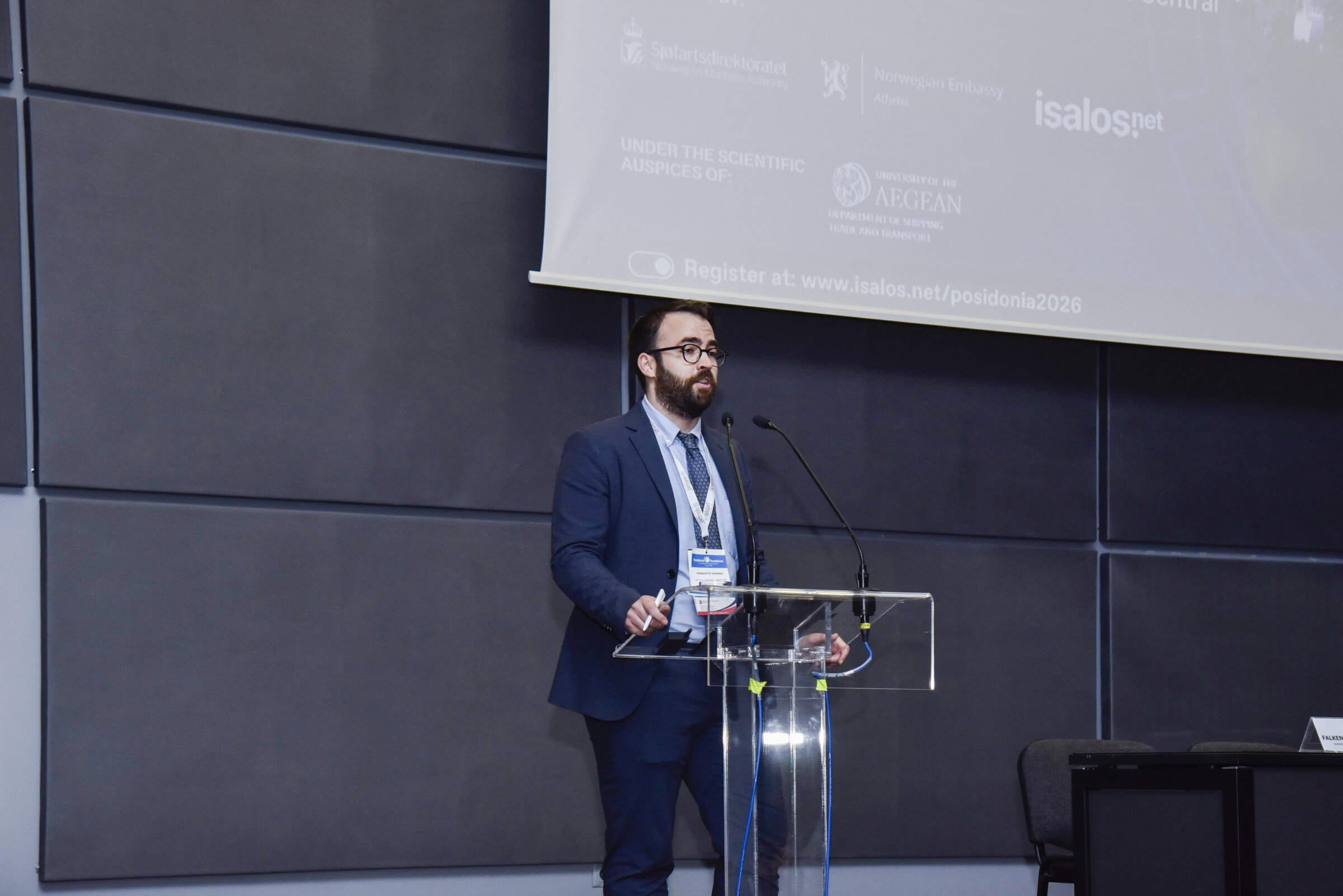
The conclusion of the event “Securing the Global Fleet: A Norway–Greece Dialogue”, the proceedings of which were moderated by Mr Panagiotis Korakas, Executive Director of Isalos.net, was marked by two special moments.
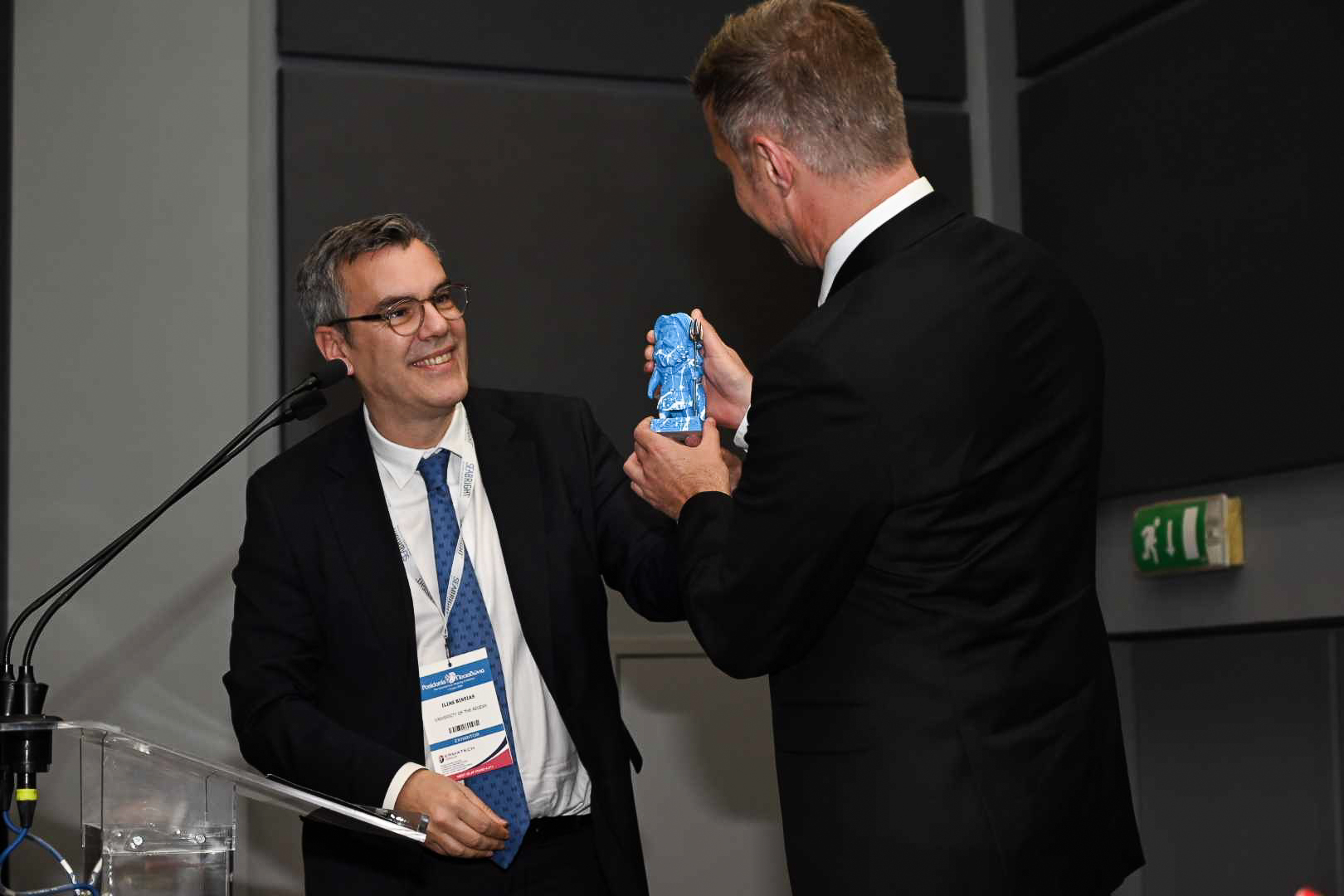
Shortly before the closing of the conference, Dr Ilias G. Bisias, Assistant Professor at the Department of Shipping, Trade and Transport, University of the Aegean, presented Mr Even T. Sagebakken with a commemorative collectible statuette of the god Poseidon, specially created for Posidonia 2026 by the exhibition’s organisers.
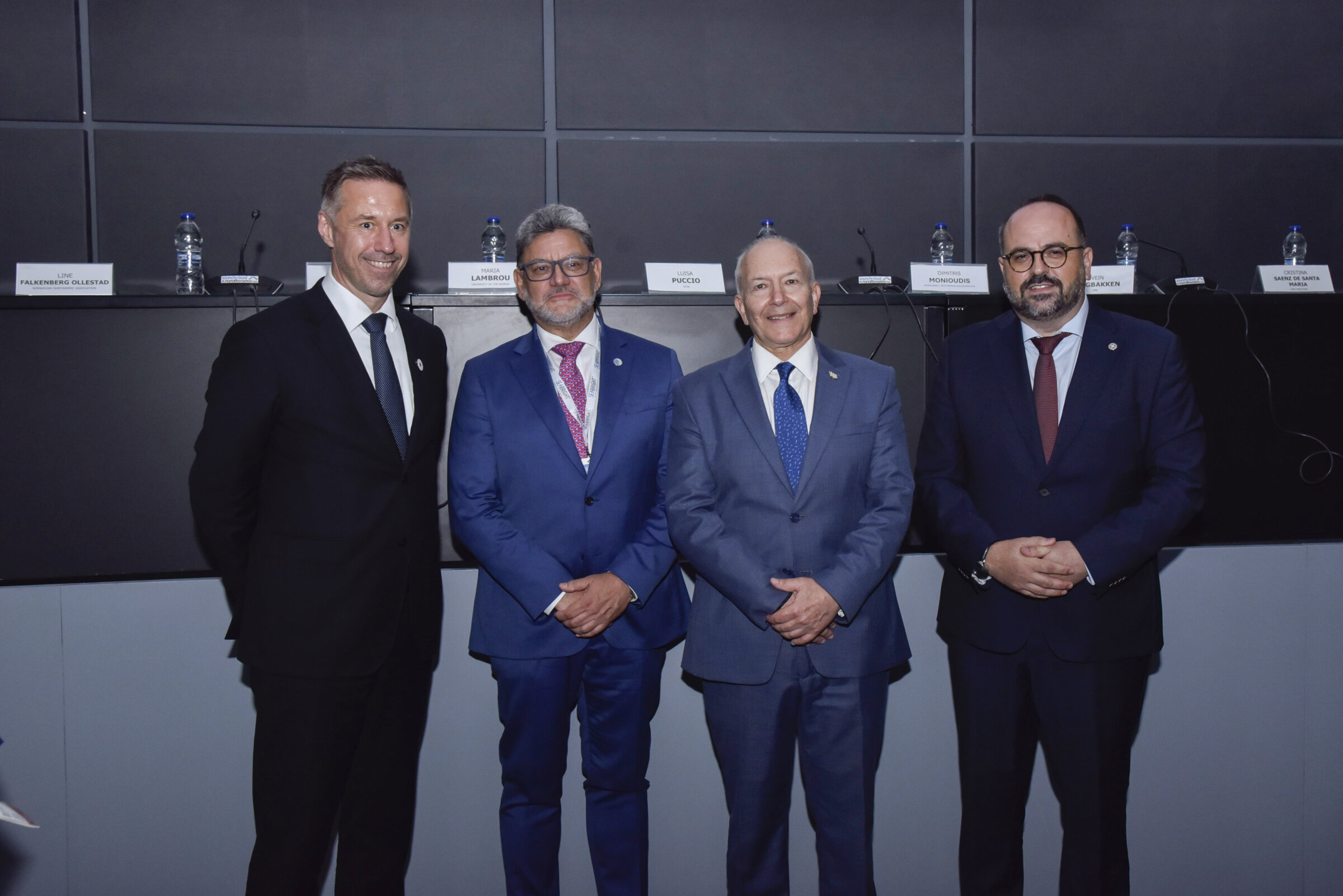
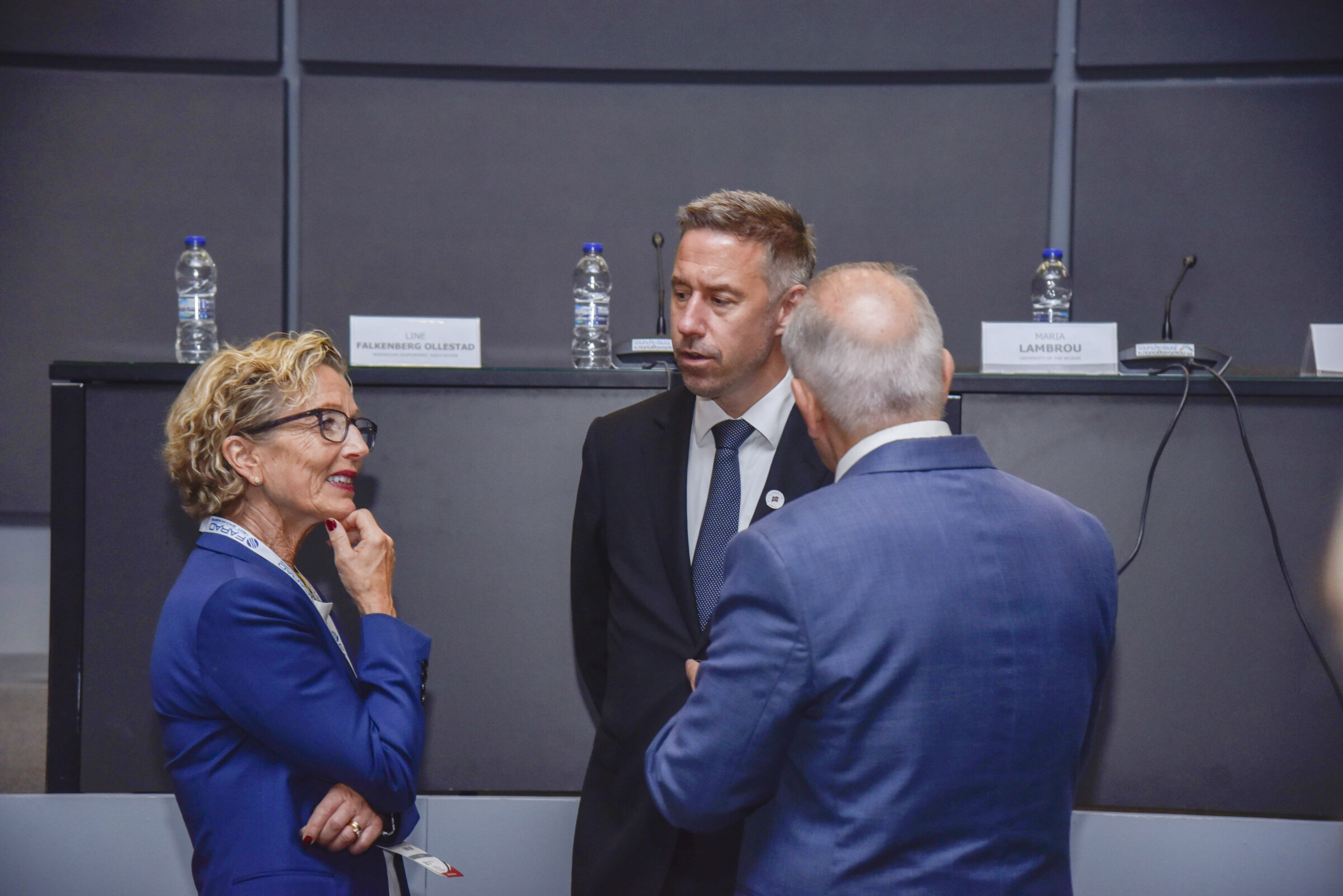
Mr Sagebakken, in turn, delivered the concluding remarks of the preceding discussion, and presented commemorative gifts to the participating speakers.
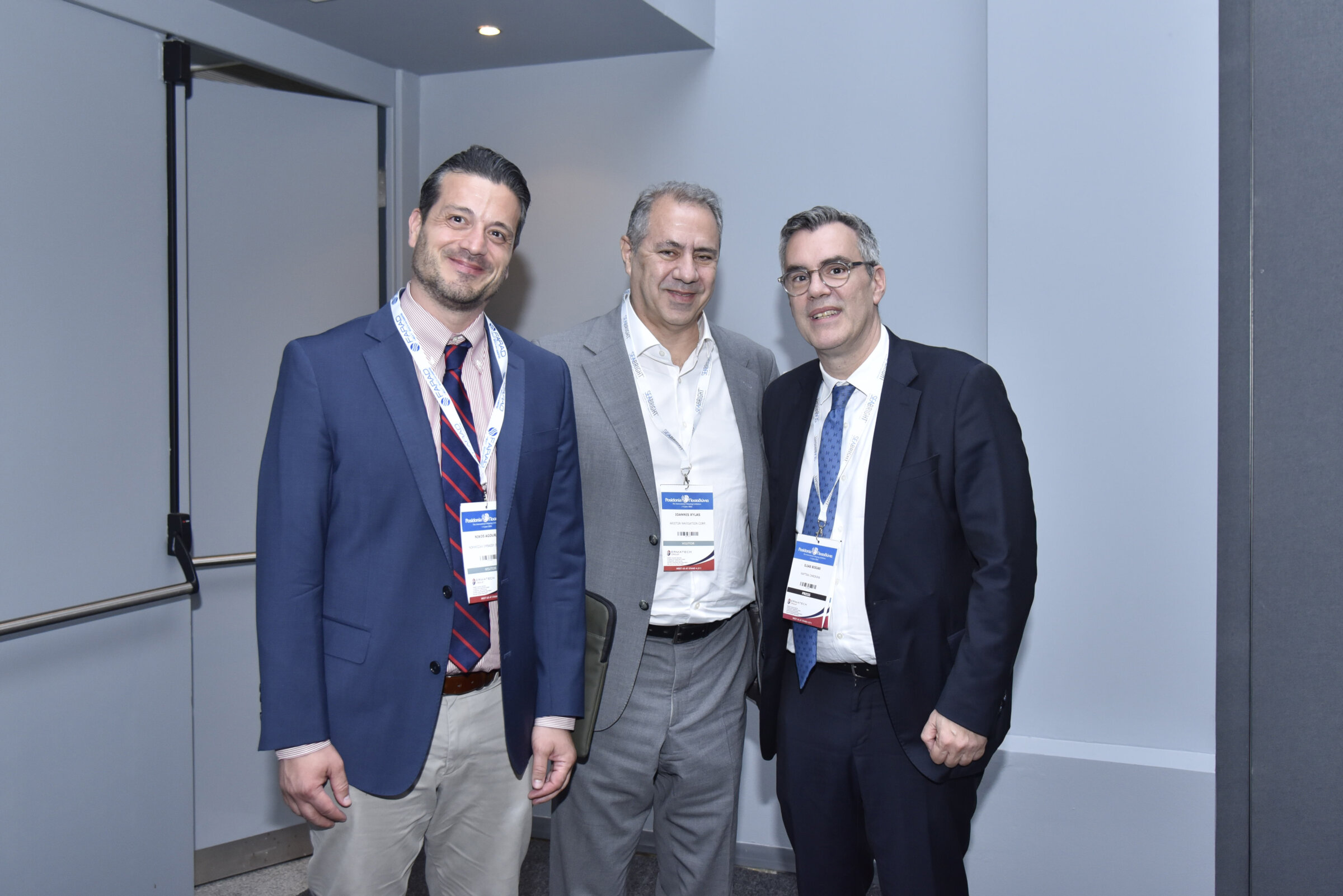
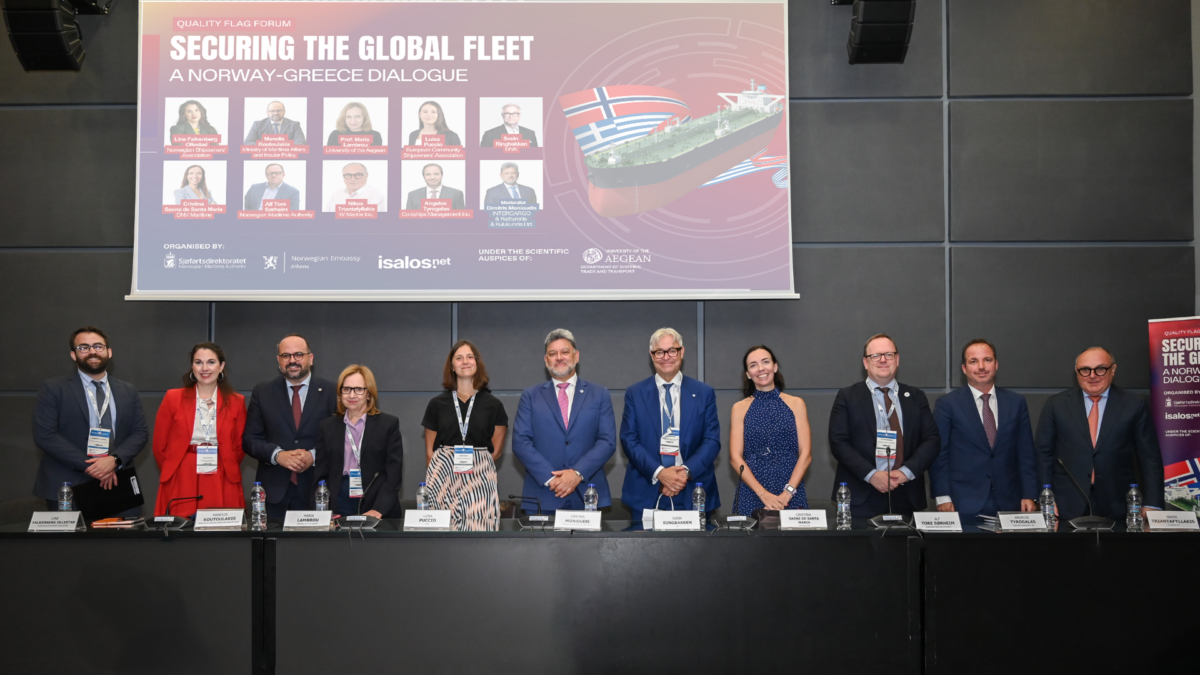
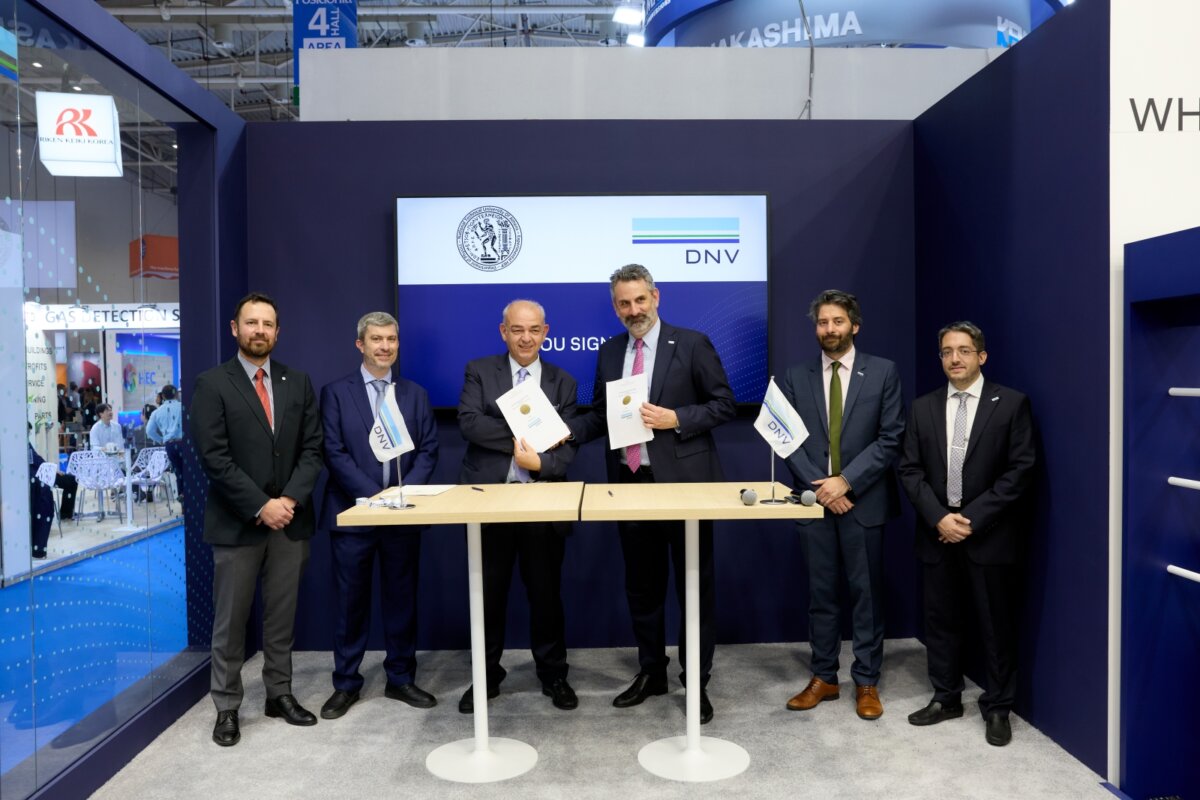
Below are photographic snapshots from the event: